
Mineral Processing Reagents

-
 E-mail
xhcnlite@xinhaimining.com
E-mail
xhcnlite@xinhaimining.com
-
 Call Us
008613683147042
Call Us
008613683147042
E-mail
xhcnlite@xinhaimining.com
Call Us
008613683147042
2026-05-27 Views: 1344
Warm Tip: If you want to know more information, like quotation, products, solutions, etc., please Click here ,and contact us online.
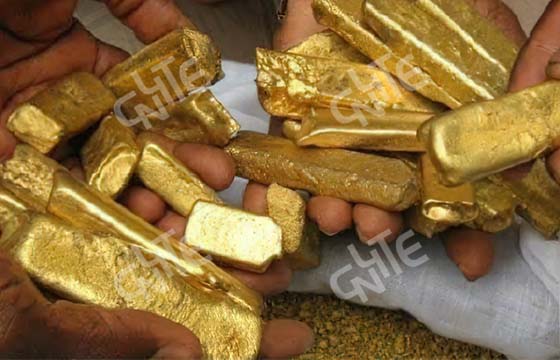
Before we look at the big steel tanks and heavy machines, we need to understand the basics. What exactly is happening in the dirt? It is not magic at all. It is just simple science.
Think about making a cup of hot coffee in the morning. You put warm water over ground coffee beans. The water takes the dark flavor out of the beans. Leaching works exactly like that. But instead of coffee beans, we have crushed rocks. And instead of pure water, we use a special chemical liquid. The liquid goes slowly through the rock. It grabs the gold hidden inside. Then we collect the liquid at the bottom. You can click here to learn more about the [Gold Leaching Explained: From Ore to Pure Gold. Honestly, it sounds super simple when I explain it like that. But getting it to work perfectly takes a lot of time. The chemistry must be exact. If the liquid is too weak, the gold just stays inside the rock. You will lose your money.
You cannot just pour liquids on rocks and hope for the best results. A smart manager watches everything very closely. You need to control the heat of the water. You need to watch the pH levels all day. You also need to check how small you crush your rocks. If the rocks are too big, the liquid cannot reach the gold hidden inside. It is like trying to wash dirt out of a closed hand. You must open it up first. If you miss one step, your gold mine loses cash fast. I highly recommend reading about [7 Key Factors Influencing Gold Leaching Processes] to stay safe. I once visited a small site where the water was just a little too cold. Their gold output dropped fast in just one week. Little details really matter in this business.
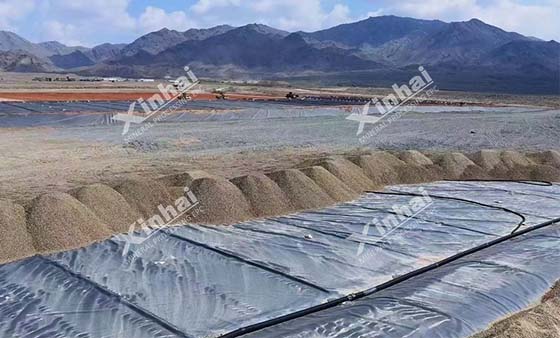
Sometimes, the rock has very little gold in it. Building big steel tanks for this cheap dirt costs way too much money. So, we use heap leaching instead. It is much cheaper and easier to build.
Heap leaching is basically making a giant hill of dirt. First, you clear a large flat space of land. Then you put down a thick black plastic mat. This plastic mat is super important. It stops the gold liquid from leaking deep into the ground. Next, you pile your crushed rock very high on the mat. You put small pipes on top of the hill. These pipes slowly drip liquid over the rocks all day and night. You can see how this connects in a [Gold Heap Leaching Process (with Process Flow)]. Building that plastic mat takes real skill. If it leaks, you lose your gold forever. You need [advanced heap leaching engineering] to keep the tall hill safe. If it rains hard, a poorly built hill could slide down and ruin everything.
Running a gold mine is very expensive. You always want to save money where you can. Heap leaching is already cheap. But smart people find ways to make it even cheaper. You can check out some[Gold Heap Leaching: Reduce Your Costs]to try at your own site. A big cost is the liquid you spray. Cyanide works very well. But it is hard to handle and bad for the earth. Many folks are looking for greener options right now. You must pick the right chemicals for your specific rock type. Read our guide on [Gold Recovery Chemicals: A Practical Guide for Small-Scale Miners and Labs]to see what fits best. A guy in Nevada just changed how fast his pipes dripped the liquid. He saved thousands of dollars a week. Paying attention really pays off.
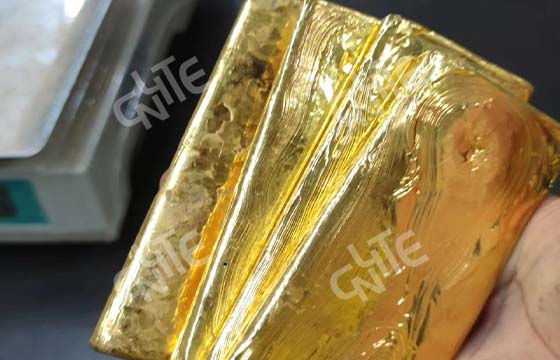
Heap leaching is very slow. It can take months. If you have rich rock, you want your gold fast. This is where big tanks come in. We use methods named CIP and CIL. They get almost all the gold out very quickly.
CIP means Carbon-in-Pulp. Let me explain it simply. First, you grind the rock into wet mud.
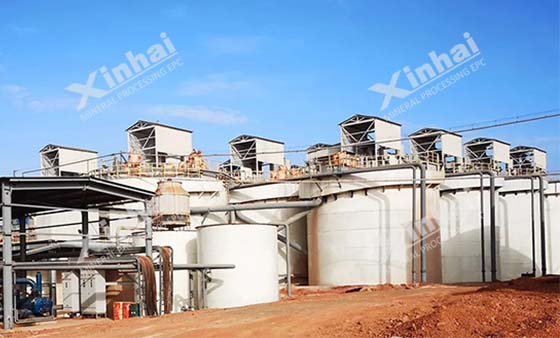
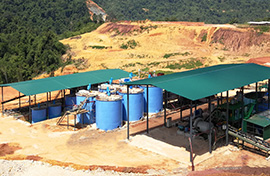
You put this wet mud into huge round tanks.
Then you add strong chemicals to extract gold. After the liquid grabs the gold, you add tiny pieces of black carbon. The carbon works just like a magnet. It pulls the gold out of the liquid.
This is a great way to do[Carbon-in-Pulp Process: A Guide to Efficient Gold Extraction (CIP)].
Setting this up takes big heavy machines. You need huge stirrers to keep the heavy mud moving.
If the mud stops moving, the whole process fails. You can read a full guide about [CIP Gold Processing Plant].
Want to see a real company do it? Look at this [Gold CIP Production Line (Based on Real Case)]. It shows the real work behind the scenes.
CIL stands for Carbon-in-Leach. It is like CIP, but with a clever twist. In CIP, you leach first, then add carbon later. In CIL, you do both steps at the exact same time.
You put the chemicals and carbon into the mud together. This saves a lot of time and tank space.
Many owners have a hard time[Gold Leaching: CIP vs. CIL Processes – Which One to Choose?].
It really depends on your dirt. Some dirt has natural stuff in it that steals gold early. For that bad dirt, CIL is usually much better.
You can read the[Carbon-in-Leach Flow Diagram (CIL) for Gold Extraction]to see the numbers.
For a real example, check out this[Malaysia 600t/d Gold Mine CIL Cyanidation Processing Plant Project].
They process 600 tons of rock every single day. It shows how powerful a well-built gold processing plant can be when everything works right.
You now know the basics of Heap, CIP, and CIL. Getting gold out of the ground takes big money, a lot of time, and smart choices. Every gold mine is completely different. The rocks in Africa are not the same as the rocks in Asia. You cannot just copy what the next guy is doing. You must test your rock in a lab first. Once you know your dirt, you can build the right system.
Feel free to fill out the form below to contact us! Good luck out there in the dirt!
 008613683147042
 xhcnlite@xinhaimining.com
No. 188, Xinhai Street, high-tech Industrial Park, Fushan District, Yantai, Shandong, China.
Please leave your message here! We will send detail technical info and quotation to you!

 Home
Home Online Service