
Mineral Processing Reagents

-
 E-mail
xhcnlite@xinhaimining.com
E-mail
xhcnlite@xinhaimining.com
-
 Call Us
008613683147042
Call Us
008613683147042
E-mail
xhcnlite@xinhaimining.com
Call Us
008613683147042
2026-04-30 Views: 2435
Warm Tip: If you want to know more information, like quotation, products, solutions, etc., please Click here ,and contact us online.
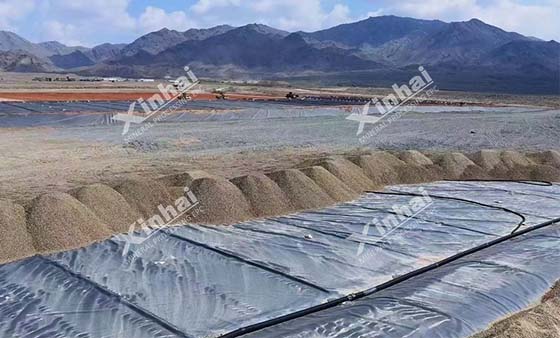
If you visit a 5,000 TPD gold mine in West Africa or Central Asia, you will rarely see traditional smelting as the main recovery method. Instead, you will see tanks, pipelines, heap pads, and cyanide solution flowing quietly. That is GOLD LEACHING in action.
In simple words, the GOLD LEACHING PROCESS dissolves gold from crushed ore using a chemical solution, most commonly sodium cyanide. The dissolved gold is then recovered later by adsorption or precipitation.
Why is it so popular? Because even low-grade ore — say 0.8–1.2 g/t — can still make money. Thirty years ago, such ore might be waste rock.
Ore is crushed down to 10–15 mm for HEAP LEACHING, or even to 75 microns for tank leaching (CIL/CIP). Finer particles mean better contact with cyanide, but also higher power cost. Engineers always balance these two.
Gold reacts with cyanide and oxygen under alkaline conditions:
Optimal pH: 10.5–11
Cyanide concentration: 200–500 ppm
Dissolution time: 24–60 days (heap), 24–36 hours (CIL)
A small pH mistake (below 10) can increase cyanide loss sharply. I've seen projects lose 15% more reagent just because lime dosing was unstable. It sounds minor, but it's expensive.
In CIL plants, activated carbon adsorbs dissolved gold. In HEAP LEACHING, pregnant solution flows to adsorption columns. Later, gold is stripped and sent to electrowinning.
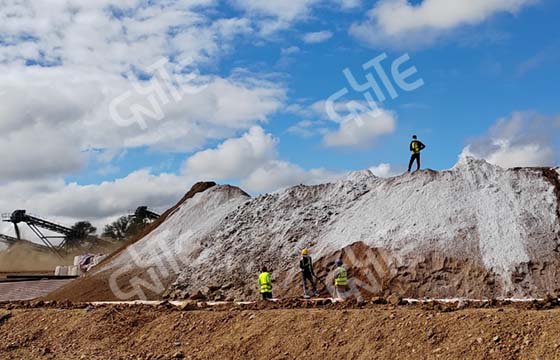
The choice depends on ore grade, climate, and capital budget.
| Item | HEAP LEACHING | CIL Process |
|---|---|---|
| Typical Grade | 0.5–1.5 g/t | 1.5–5 g/t |
| Recovery Rate | 65–75% | 88–93% |
| Investment Cost | Low | High |
| Leaching Time | 30–90 days | 24–36 hours |
| Operating Complexity | Simple | Higher |
See the first chart above: recovery difference between HEAP LEACHING and CIL can exceed 15%.
But here is the real story: HEAP LEACHING wins in low-grade, large-tonnage mines because capital cost per ton can be 40–60% lower.
The second chart above shows a typical recovery curve over 60 days. Notice how gold recovery rises fast in the first 20 days, then slows down.
This tells engineers something important:
Most easy-to-leach gold dissolves early.
Remaining gold is locked in sulfides or coarse particles.
Extending leach time from 45 to 60 days may only add 1–2% recovery. Mines must calculate whether that extra time is worth tying up working capital.
If copper content is high, cyanide consumption can double. In one 3,000 TPD mine, cyanide use increased from 0.6 kg/t to 1.1 kg/t because of reactive copper. Pre-treatment solved it.
If ore contains too much clay, solution flow slows down. Channels form, and some areas never get enough contact. Agglomeration with cement (2–5 kg/t) usually helps.
Organic matter can block adsorption sites. Regular carbon acid washing improves performance.
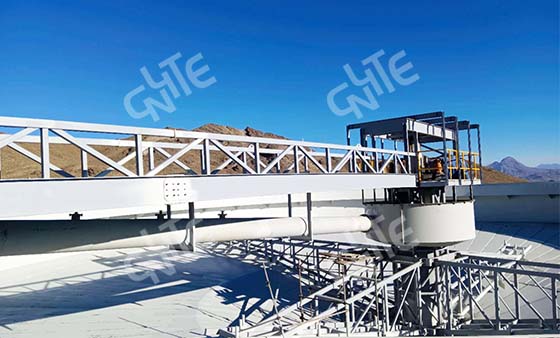
Modern plants use detox systems to reduce cyanide in tailings to below 50 ppm, often even below 10 ppm.
Water recycling rates now exceed 70% in arid regions. Compared to 1990s operations, overall cyanide discharge risk has been reduced significantly.
CIL: 88–93%. HEAP LEACHING: 65–75%, depending on ore type.
Usually no. High-grade ore justifies higher recovery via tank leaching.
Normally 30–90 days.
Copper minerals, pH control, and oxygen level.
 008613683147042
 xhcnlite@xinhaimining.com
No. 188, Xinhai Street, high-tech Industrial Park, Fushan District, Yantai, Shandong, China.
Please leave your message here! We will send detail technical info and quotation to you!

 Home
Home Online Service