
Mineral Processing Reagents

-
 E-mail
xhcnlite@xinhaimining.com
E-mail
xhcnlite@xinhaimining.com
-
 Call Us
008613683147042
Call Us
008613683147042
E-mail
xhcnlite@xinhaimining.com
Call Us
008613683147042
2026-04-28 Views: 1390
Warm Tip: If you want to know more information, like quotation, products, solutions, etc., please Click here ,and contact us online.
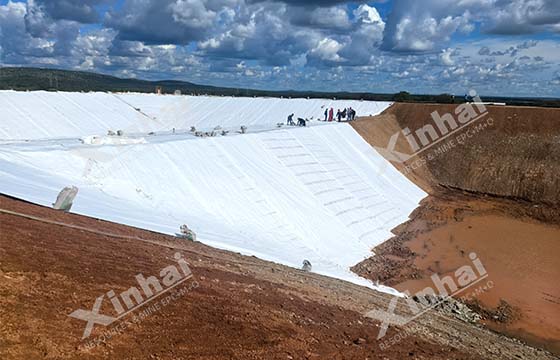
Traditional mining is a battle against physics: you spend millions on blasting, hauling, and crushing hard rock. With gold tailings, the most expensive and energy-intensive work—comminution—is already done.
| Metric | Primary Hard-Rock Mining | Tailings Reprocessing |
| Operational Cost (OPEX) | Extremely High (Blasting/Grinding) | Low (Already crushed to powder) |
| Capital Investment (CAPEX) | Massive (Full infrastructure needed) | Moderate (Repurposed or modular units) |
| Energy Consumption | ~60% of total cost spent on grinding | Minimal energy needed for feeding |
| Environmental Status | Increasing waste footprint | Reducing liability & restoring land |
| Permitting Speed | 3–10 Years (New impact) | 6–18 Months (Remediation focus) |
[Visual Note: Imagine a graph here showing the inverse relationship between declining ore grades and the rising profitability of secondary recovery.]
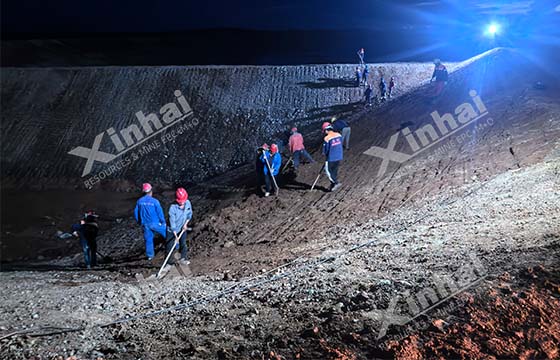
A common question from mine owners is: "If there was gold in there, why didn't we catch it the first time?" The answer lies in the "Technology Ceiling." Most legacy tailings are rich in gold because of three specific historical failures:
Fine Particle Escape: Older gravity circuits simply couldn't catch gold particles smaller than 74 microns.
Mineralogical Shielding: Gold was often "locked" inside sulfide minerals that the old plant wasn't equipped to break.
Chemical Inefficiency: Traditional cyanide often failed due to interference from copper or other "cyanicides" in the ore.
To succeed in tailings reprocessing, you cannot use a "standard"选矿 (mineral processing) flow. You need a system that treats the tailings as a unique chemical puzzle.
| Process Stage | Standard Recovery Method | Integrated Advanced System (Recommended) |
| Initial Analysis | Basic fire assaying | Mineralogical Mapping (SEM/EDX): Pinpointing exactly where the gold is hidden. |
| Particle Sizing | Direct feeding | Hydrocyclone Desliming: Removing "reagent-hungry" clays before leaching. |
| Chemical Recovery | Generic Cyanide | Selective Eco-Friendly Reagents: 30% faster leaching with lower toxicity. |
| Waste Management | Wet slurry storage (High risk) | Dry Stacking Technology: Turning waste into inert, usable sand. |
Successfully recovering gold from mine tailings requires a "Surgical Approach" to metallurgy.
Before building a plant, we perform a diagnostic leach. This tells us if the gold is "free-milling," "carbon-encapsulated," or "sulfide-locked." This single test prevents millions of dollars in wasted CAPEX.
Using high-G centrifugal concentrators, we can capture the "ultra-fine" gold that escaped the original sluice boxes. This is often the highest-margin gold in the entire project.
Modern tailings reprocessing focuses on selectivity. New-generation reagents are designed to ignore the iron and copper in the tailings and target only the gold, significantly lowering the "cost per ounce" produced.
Sustainability isn't just a buzzword; it's a financial strategy. By reprocessing your tailings, you are:
Reducing Dam Risk: Lowering the volume of the Tailings Storage Facility (TSF) to prevent failure.
Water Recycling: Modern systems allow for 90%+ water recovery, critical for mines in arid regions.
Revenue-Funded Closure: Using the gold profits to pay for the final remediation and closure of the mine site.
[Visual Note: A "Before and After" diagram showing a saturated, risky tailings dam converted into a stable, dry-stacked area.]
1. Is it worth it if my gold grade is only 0.5 g/t?
Absolutely. Because you have no mining or grinding costs, a 0.5 g/t tailings deposit often has a higher profit margin than a 3.0 g/t underground mine.
2. How long does a tailings project take to pay for itself?
Most well-designed reprocessing projects reach "payback" within 8 to 14 months, depending on the volume and the efficiency of the reagents used.
3. Can I use my existing plant for tailings?
Usually, yes. With minor modifications to the feeding system and the introduction of more selective reagents, many existing CIP/CIL plants can be pivoted to tailings.
4. What is the biggest risk in tailings reprocessing?
Clays and organic carbon. Without proper pre-treatment (desliming), these materials will "steal" your reagents and your gold.
Every tailings dam has a unique chemical signature. A "one-size-fits-all" approach is the fastest way to lose money.
At Cnlite, we specialize in the science of the "Second Chance." We provide more than just industry-leading reagents; we offer Customized Services that begin with deep mineralogical analysis and end with a high-recovery, eco-friendly operation.
Don't let your assets sit in the sand. [Contact our technical engineering team today] for a professional metallurgical evaluation of your tailings. Let's turn your environmental liability into a profitable, sustainable future.
 008613683147042
 xhcnlite@xinhaimining.com
No. 188, Xinhai Street, high-tech Industrial Park, Fushan District, Yantai, Shandong, China.
Please leave your message here! We will send detail technical info and quotation to you!

 Home
Home Online Service