
Mineral Processing Reagents

-
 E-mail
xhcnlite@xinhaimining.com
E-mail
xhcnlite@xinhaimining.com
-
 Call Us
008613683147042
Call Us
008613683147042
E-mail
xhcnlite@xinhaimining.com
Call Us
008613683147042
 Home
Guides
Helpful Guide
The Ultimate Guide to Gold Extraction: Methods, Plant Design, and Yield Optimization
Home
Guides
Helpful Guide
The Ultimate Guide to Gold Extraction: Methods, Plant Design, and Yield Optimization
2026-07-30 Views: 476
Warm Tip: If you want to know more information, like quotation, products, solutions, etc., please Click here ,and contact us online.
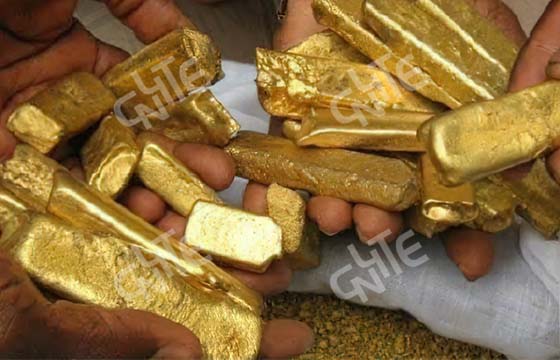
The best way to extract gold is the Carbon-in-Leach (CIL) method. It usually hits 90% to 95% recovery for oxidized ores. This process melts the gold and sticks it to activated carbon at the exact same time. This stops gold from getting lost to sneaky preg-robbing rocks. For cheap, low-grade dirt, heap leaching works better. It is slower, but it saves money and gets 65% to 80% of the gold.
Picking the right way to extract gold depends entirely on your rock type. Free-milling rocks are very easy to leach. But tough rocks hide gold inside stuff like pyrite. You have to roast or oxidize them first. We often use simple gravity separation first. It catches the big free gold chunks right away. This makes less work for the chemicals later on. Testing your rock first is a must before building any gold plant.
Comparison of Primary Gold Extraction Methods
| Extraction Method | Best Rock Type | Average Recovery | Setup Cost | Processing Time |
| CIL / CIP | High-grade, oxidized | 90-95% | High | 24-48 Hours |
| Heap Leaching | Low-grade, porous | 65-80% | Low | 60-120 Days |
| Gravity Separation | Placer, big free gold | 30-70% | Very Low | Fast |
| Flotation | Sulfide, tough rock | 85-92% | Medium | 12-24 Hours |
Think about a gold mine in Africa running a 2.5 g/t oxidized ore. Using only gravity might get you 40% of the coarse gold. If you add a CIL step for the leftover dirt, you catch the tiny hidden gold. Now your total yield jumps to 93%. Honestly, that kind of jump makes or breaks a project.
Out in the field, I always see guys obsess over soak time in the tanks. But they forget about the carbon. Dirty or old carbon drops your yield by 3% to 5%. It does not matter how fine you grind the rock if your carbon is junk.
A big mistake is skipping the rock tests. People just copy-paste a basic Carbon-in-Pulp (CIP) setup for preg-robbing ores. The rock itself steals the gold back! You end up dumping good money into the trash pile.
Does your rock have lots of natural carbon or clay? Always pick CIL over CIP. The added carbon in the tank will steal the gold ions before the rock can.
Test your rock on a bench first.
CIL beats CIP for preg-robbing rocks every single time.
Heap leaching is still the cheapest way to treat huge piles of poor rock.
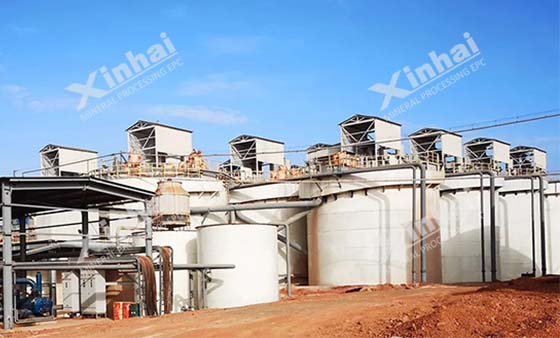
Picking the right chemical to extract gold means balancing speed, local rules, and costs. Sodium Cyanide (NaCN) is the old favorite. But today, eco-friendly gold leaching reagents are super popular. They swap out the scary cyanide and cut down rule-following costs. You still get 85-95% of your gold. Plus, shipping them is so much easier.
Gold extraction needs solvents to melt solid gold into a liquid. Cyanide needs tight pH control (around 10.5-11.0) using lime. If you mess up, you get deadly gas. Now, places like Australia and parts of Africa make moving cyanide a massive headache. Eco-friendly reagents, like Cnlite, are low-toxicity swaps. They work great in your normal CIL/CIP tanks. You get the gold without the NaCN danger labels.
Sodium Cyanide vs. Eco-Friendly Gold Leaching Reagent
| Reagent Trait | Sodium Cyanide (NaCN) | Eco-Friendly Reagent (like Cnlite) |
| Extraction Yield | 85-95% | 85-95% |
| Danger Level | Very Toxic / Dangerous | Low Toxicity / Normal Cargo |
| Rule Compliance Cost | High | Low |
| Shipping & Storage | Hard to get permits | Normal shipping rules |
| Gear Changes | None (Normal) | None (Drop-in fix) |
A real 500 TPD gold processing plant swapped NaCN for an eco-friendly gold leaching reagent. They kept a solid 92% recovery rate. But their shipping costs dropped by 25%. Why? Because normal cargo is way cheaper to move than dangerous goods.
In Africa, bad port delays for dangerous chemicals can stop a gold plant for weeks. Our field teams notice that safe, green reagents skip these awful bottlenecks. Your plant keeps running smoothly.
Plant bosses often think switching away from cyanide means buying all-new tanks. That is totally false. Good green reagents are direct drop-ins. You just use your old mixing gear.
Green chemicals pull just as much gold as cyanide.
Safer chemicals slash your shipping and rule-following bills.
You do not need to rebuild your CIL/CIP plant to switch.
A good gold processing plant has three main parts. First, breaking the rock (crushing). Second, grabbing the gold (leaching). Third, the finish line (Electrowinning of Gold). Breaking the rock sets the gold free. The leaching part melts the gold into carbon. Finally, you strip the gold off and make heavy doré bars.
Building a gold plant means sizing your machines perfectly. You use jaw crushers and big ball mills. You want to smash the rock down so 80% passing 75 microns is reached. In the tanks, we stir the muddy water with leaching chemicals. Later, we move the loaded carbon to a hot, high-pressure tube. This strips the gold. Then, the Electrowinning of Gold step plates it onto steel wool.
Gold Plant Circuit Breakdown and Critical Equipment
| Plant Stage | Main Job | Core Machines | Key Control Thing |
| Breaking Rock | Make pieces tiny | Jaw Crusher, Ball Mill | Grind Size (P80) |
| Extracting | Melt & catch gold | Tanks, Carbon Screens | pH, Reagent Dose |
| Recovery | Make gold bars | Hot Tube, Electrowinning of Gold | Temp, Power Flow |
| Waste | Handle dirt safely | Thickener, Detox Tanks | Slurry Density |
Say your plant processes 1,000 tons of rock a day. A cyclone makes sure only dust smaller than 75 microns moves on. If it breaks and lets 150-micron bits pass, the gold stays trapped in the stone. You instantly lose 10-15% of your gold. I've seen it happen, and it hurts.
A huge mistake is buying a tiny thickener tank. If the mud going into the CIL tanks is too watery, it moves through too fast. The gold does not have time to melt.
Spend the big bucks on smart pump controls. Automated drives keep your rock grind size perfect. Grind size is the absolute best secret to getting more gold.
Rock size is everything. Tweak your mills.
Keep a close eye on your mud thickness before leaching.
Electrowinning of Gold demands crystal clean liquid.
It changes a lot. Gravity methods are super fast. CIL and CIP tanks need about 24 to 48 Hours. Heap leaching is the slowest path. It takes 60 to 120 Days to get the gold out of the dirt pile.
In CIP, you melt the gold first, then add carbon in later tanks to catch it. In CIL, you melt the gold and catch it with carbon all at once in the exact same tank. CIL is way better for tricky rocks.
Yes! Sodium cyanide is the old way. Now, eco-friendly gold leaching reagents work as a safe swap. Things like thiosulfate work too. But the patented green reagents fit best into older plants without extra work.
It depends on where you are and your rock type. A small gravity gold processing plant is around $2M–$5M USD. A massive 1,000 TPD CIL gold plant can cost $20M to $50M USD. Test your rocks early so you don't overspend.
Bad recovery usually comes from big rock chunks. The gold is still trapped. Other reasons? Not enough air in the mud, bad pH levels, or using dirty carbon. Copper in the rock can also eat up your chemicals.
This is when bad stuff in the raw rock acts like a sponge. It steals the melted gold before your good plant carbon can grab it. You end up throwing the gold away in the trash dirt.
Hard rock means high bills. You spend way more electricity to crush it. Plus, it breaks your steel grinder balls fast. This makes running your gold mine much more expensive every single day.
It works just like a sponge. When the chemical melts the gold, the carbon grabs the gold bits. We then wash the carbon to get the pure gold back.
They act a lot like cyanide. They melt solid gold into the water. But they don't have the deadly parts that make toxic gas. This makes them super safe for your workers to handle.
Usually, no. If you have rich rock, spend the money on a real gold processing plant. You get 90-95% back. Heap leaching is only for cheap, poor rock where crushing it costs too much.
Got questions or need gear? Whether you are building a new gold plant from scratch or want to switch to safe, eco-friendly gold leaching reagents, smart engineering helps. Get a custom plan to extract gold from your specific rock.
 008613683147042
 xhcnlite@xinhaimining.com
No. 188, Xinhai Street, high-tech Industrial Park, Fushan District, Yantai, Shandong, China.
Please leave your message here! We will send detail technical info and quotation to you!

 Online Service