
Mineral Processing Reagents

-
 E-mail
xhcnlite@xinhaimining.com
-
 Call Us
008613683147042
E-mail
xhcnlite@xinhaimining.com
Call Us
008613683147042
 Home
Guides
Helpful Guide
The Real Cost of Gold Leaching Chemicals: It Is Not the Price per Kilogram
2026-11-25 Views: 12
Warm Tip: If you want to know more information, like quotation, products, solutions, etc., please Click here ,and contact us online.
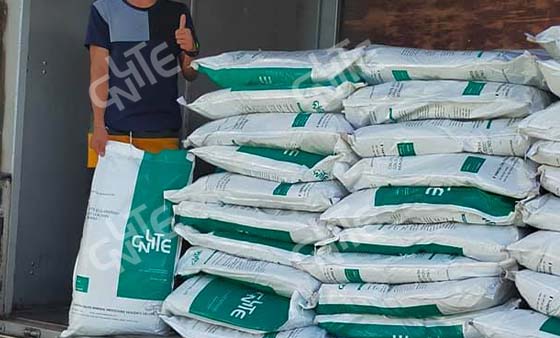
Many mine owners look first at the delivered price per kilogram. But the real cost is:
How much reagent is consumed per ton of ore;
How much gold is recovered;
How stable the leaching circuit is;
Whether downstream carbon adsorption, detoxification, and solution management costs increase.
A lower-priced reagent does not always reduce cost. If consumption rises or recovery falls, the total cost per ton may be higher.
Key message: Low unit price does not mean low cost. Look at reagent cost per ton of ore, gold recovery, and circuit stability together.
Use the same production period for reagent use, ore tonnage, and recovered gold.
| Item | Calculation | Plain-language meaning |
|---|---|---|
| Reagent cost per ton | Reagent used (kg) × delivered price per kg ÷ dry ore treated (t) | Reagent cost for each ton of dry ore |
| Total leaching chemical cost | Sum of all reagent costs in the leaching circuit | Include all leaching reagents, not just one product |
| Cost per recovered ounce | Total leaching chemical cost ÷ recovered gold (oz) | Reagent cost for each ounce of gold recovered |
1 oz is about 31.1 g. If your site uses grams, convert consistently and compare all results on the same basis.
| Item | What to do | Why it matters |
|---|---|---|
| Reagent used | Use actual consumption from inventory and addition records where possible | Converts unit price into real operating cost |
| Dry ore treated | Use dry tonnage and reconcile moisture and tonnage | Mixing wet and dry tonnage causes wrong results |
| Gold recovery | Check head, residue, and solution assays | Prevents “saving reagent but losing gold” |
| Ore domain | Compare by ore type or feed source | Prevents comparing unlike ores |
| Data limits | If inventory corrections are unavailable, state the limitation | Keeps the comparison honest and credible |
Do not mix laboratory dosage with plant consumption. Do not use wet tonnage in one calculation and dry tonnage in another.
Reagent demand is a response to ore conditions, process conditions, and operating practice—not a fixed property of a product. The same reagent may perform differently at another mine.
| Factor | Possible effect | What to check on site |
|---|---|---|
| Gold occurrence | Fine or locked gold may not contact the reagent | Mineralogy, grind size, gold particle size |
| Oxidation and sulfide content | Different ore types may need different reagent doses | Test representative samples by ore domain |
| Copper or other cyanide-soluble minerals | May increase reagent consumption | Mineral analysis |
| Carbonaceous material | May adsorb gold or reagents and cause losses | Carbon content and type |
| Grind size | Too coarse exposes less gold; too fine may create slimes | Grind size and particle-size distribution |
| pH, dissolved oxygen, solids density | Affect leaching reaction and reagent efficiency | Site records against test or design basis |
| Leaching time and reagent addition points | Insufficient time or poor addition reduces performance | Residence time and addition points |
| Operating control | Poor control can turn a reasonable dose into waste | Addition records, sampling, operator practice |
Important: A high addition rate is not proof that the ore truly needs more reagent. Check sampling, assays, pH, dissolved oxygen, solids density, and addition points before increasing dosage.
Keep the sample, grind, solids density, and test duration consistent. Change one reagent condition at a time. Record all operating conditions.
| Test requirement | What to do | Purpose |
|---|---|---|
| Representative sample | Use the same ore type and a representative sample | Avoid misleading results from different ores |
| Consistent conditions | Keep grind, solids density, and test time the same | Make results comparable |
| One change at a time | Change only one reagent or dose per test | Identify what actually caused the effect |
| Measure grades | Measure head and residue grades | Confirm whether recovery is stable |
| Measure consumption and losses | Record reagent use and relevant solution losses | Calculate real cost |
| Repeat tests | Include enough repeats to show the difference is real | Avoid treating normal variation as a result |
| Plant trial checks | Reconcile reagent inventory and dry tonnage over the same period; separate feed changes from reagent effects | Prove performance at plant scale |
| Total cost view | Compare recovery and total processing cost, not only chemical spend; include downstream effects where relevant | Confirm whether savings are real |
If the answers are not supported by test or plant data, the trial is not finished. Product-specific dosage, recovery, or savings claims require verified evidence: [CNLITE to provide verified data].
Do not ask only “What is your price per kilogram?” Ask these first.
| Question | Acceptable evidence | If evidence is missing |
|---|---|---|
| Does the reagent work on this ore under controlled conditions? | Test data from representative samples | Run tests before buying at scale |
| Is recovery stable at the proposed dosage? | Repeat tests and plant data | Continue testing; do not rely on one result |
| Does the delivered cost per ton or per recovered ounce improve after all operating effects are counted? | Lower total cost without lower recovery | Do not buy based only on low unit price |
| If you look only at unit price | Look instead at the total account |
|---|---|
| Lower price per kilogram | Is reagent cost per ton of ore lower? |
| Supplier says dosage is low | Is actual plant consumption lower? |
| Good result in one test | Is recovery stable in repeat tests and plant operation? |
| Chemical spend falls | Does total processing cost and cost per recovered ounce fall? |
| Reagent is cheaper | Do downstream carbon, detoxification, and solution costs increase? |
Send CNLITE your:
Ore type;
Gold grade;
Daily processing capacity;
Current leaching method;
Available test results.
Feel free to contect us! The CNLITE technical team can help review the comparison basis and identify missing checks before a reagent trial—so you avoid “looking only at unit price and calculating the wrong total cost.”
 008613683147042
 xhcnlite@xinhaimining.com

No. 188, Xinhai Street, high-tech Industrial Park, Fushan District, Yantai, Shandong, China.
Please leave your message here! We will send detail technical info and quotation to you!

 Online Service