
Mineral Processing Reagents

-
 E-mail
xhcnlite@xinhaimining.com
E-mail
xhcnlite@xinhaimining.com
-
 Call Us
008613683147042
Call Us
008613683147042
E-mail
xhcnlite@xinhaimining.com
Call Us
008613683147042
 Home
Guides
Helpful Guide
How to Extract Gold from Mine Tailings: A Practical Guide to Unlocking Hidden Value
Home
Guides
Helpful Guide
How to Extract Gold from Mine Tailings: A Practical Guide to Unlocking Hidden Value
2026-04-23 Views: 1718
Warm Tip: If you want to know more information, like quotation, products, solutions, etc., please Click here ,and contact us online.
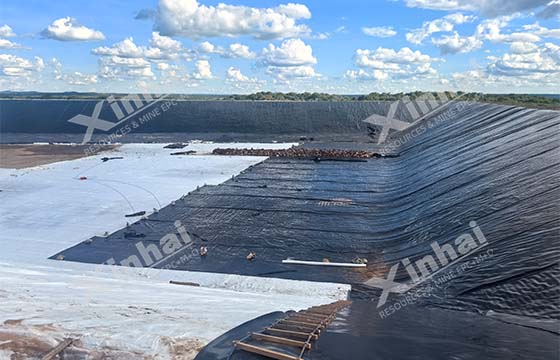
It is a question that baffles many: If the ore was already processed, why is there still gold in the sand?
In historical operations, gold loss wasn't usually due to negligence; it was a limitation of the "tech ceiling" at the time:
Ultra-Fine Particles: Traditional sluices and basic gravity circuits were almost useless against micron-sized "fine gold."
Chemical Shielding: Gold was often "locked" inside sulfide minerals (like pyrite), making it inaccessible to leaching reagents.
Throughput Bottlenecks: Older plants often sacrificed the final 15-20% of recovery to maintain higher daily tonnage.
| Loss Type | Description | Modern Solution |
| Physical Loss | Fine gold flows directly into the dam with the water | High-G Centrifugal Concentrators |
| Chemical Encapsulation | Gold is "locked" in the mineral lattice | Ultrafine Grinding (UFG) or Bio-oxidation |
| Reagent Failure | Interference from base metals causes poor cyanidation | High-selectivity, eco-friendly leaching reagents |
To turn gold tailings into cash, you cannot simply copy the model of a new mine. You need a "precision net" designed specifically for pre-crushed material.
Gravity is the cheapest way to recover value. If your tailings contain free-milling gold or heavy minerals, centrifugal concentrators are the first choice. They utilize forces up to 60G to "grab" the tiny gold particles that would otherwise float away in the slurry.
If mineralogical analysis shows that your gold is attached to sulfides, flotation is your "magnet." By re-floating the tailings, we can pull out a high-grade concentrate, drastically reducing the volume of material that needs chemical leaching—saving you a fortune in reagent costs.
This is the make-or-break step. While traditional cyanide is effective, it presents a massive "headache" for mine tailings projects due to environmental pressure and slow kinetics on weathered ore.
Expert Insight: Leading operations are shifting toward "Eco-friendly Leaching Reagents." These reagents not only bypass strict environmental permitting but also tend to leach oxidized tailings up to 30% faster than traditional methods.
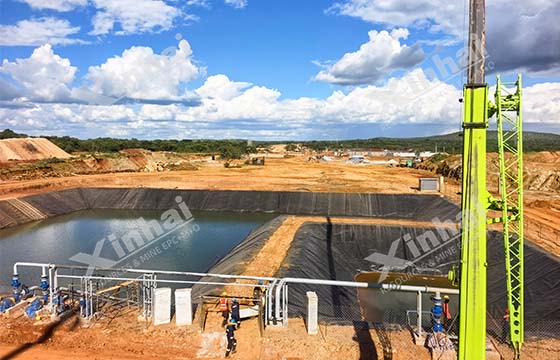
When evaluating a tailings project, don’t just look at the grade. A 0.5g/t tailings project can be more profitable than a 3g/t deep-shaft mine because of the "Infrastructure Advantage."
| Cost Item | Primary Hard-Rock Mine | Tailings Reprocessing |
| Blasting & Mining | Extremely High (Drills, Explosives) | Extremely Low (Hydraulic or Loaders) |
| Comminution (Grinding) | Over 60% of total power bill | Near Zero (Ore is already a powder) |
| Permitting Pressure | Slow (New site impact) | Fast (Often seen as a cleanup project) |
| Project Timeline | 3–5 Years (Discovery to Production) | 6–12 Months (Fast-track conversion) |
The Verdict: In a tailings project, every dollar is spent on "recovery," not on "moving and smashing rocks."
Global mining giants are pivoting toward the "Circular Mining" model.
Old tailings dams often pose seepage risks. Through tailings reprocessing, you are effectively "cleaning" and stabilizing these waste sites. Once the gold is removed, the remaining inert sand can be used for paste backfill or construction materials. This "Remediation + Profit" model provides incredible EEAT (Expertise, Authoritativeness, and Trust) in the eyes of regulators and local communities.
Start with a "Multi-element Analysis" and a "Size Distribution Test." If your gold grade is above 0.3g/t and sits between +200 mesh and -325 mesh, you have a high-potential asset.
Often, they are more effective. Weathered tailings have oxidized surfaces that can interfere with cyanide. Modern eco-friendly reagents often contain activators that penetrate these oxide layers better, boosting recovery rates.
Not necessarily. Many projects can repurpose existing leaching tanks. You mainly need to optimize the "feed system" (like hydrocyclones) and the reagent dosing circuit.
Since eco-friendly reagents leave low-toxicity residues, the final tailings can often be dry-stacked or used as raw material for bricks, completely eliminating the long-term risk of the tailings dam.
With gold prices at historic highs and increasing government subsidies for "Zero Waste" mining, the margin for error in tailings recovery has never been more favorable.
No two tailings dams are identical. Your mineralogy, clay content, and chemical signature dictate a specific strategy.
At Cnlite, we don't just provide reagents; we provide a full-spectrum Customized Service—from metallurgical testing and flow-sheet optimization to on-site implementation. Our goal is simple: use the greenest methods to pull the most gold from your waste.
Curious about the value hidden in your site? Contact our technical consultants today for a professional preliminary evaluation. Let’s turn your environmental liability into a profit powerhouse.
 008613683147042
 xhcnlite@xinhaimining.com
No. 188, Xinhai Street, high-tech Industrial Park, Fushan District, Yantai, Shandong, China.
Please leave your message here! We will send detail technical info and quotation to you!

 Online Service