
Mineral Processing Reagents

-
 E-mail
xhcnlite@xinhaimining.com
-
 Call Us
008613683147042
E-mail
xhcnlite@xinhaimining.com
Call Us
008613683147042
2026-11-27 Views: 13
Warm Tip: If you want to know more information, like quotation, products, solutions, etc., please Click here ,and contact us online.
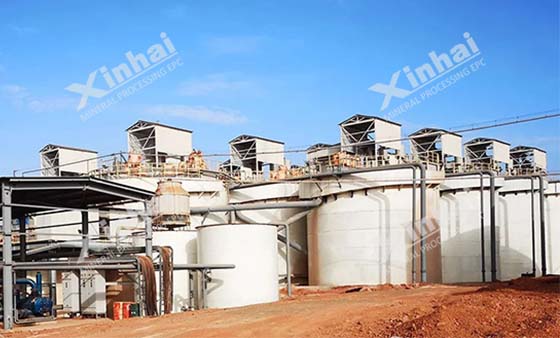
A gold processing plant in Guinea is usually decided by one question most owners do not ask early enough: which flowsheet fits this ore? Get that wrong and you spend the whole project fighting the feed instead of recovering gold. For a lot of the country's laterite gold, the honest answer is carbon-in-pulp, and the reasons are worth understanding before anyone quotes you a plant.
Guinea's near-surface gold sits in laterite that weathers into fine, powdery material. That is exactly the situation where carbon-in-pulp earns its keep. The carbon does the collecting, so the plant does not depend on settling a sticky, clay-loaded pulp the way a counter-current decantation circuit would.
There is a practical payoff too. CIP tolerates the fines that a cleaner, coarser feed would not, which is what makes it the workhorse for this kind of oxide gold across West Africa.
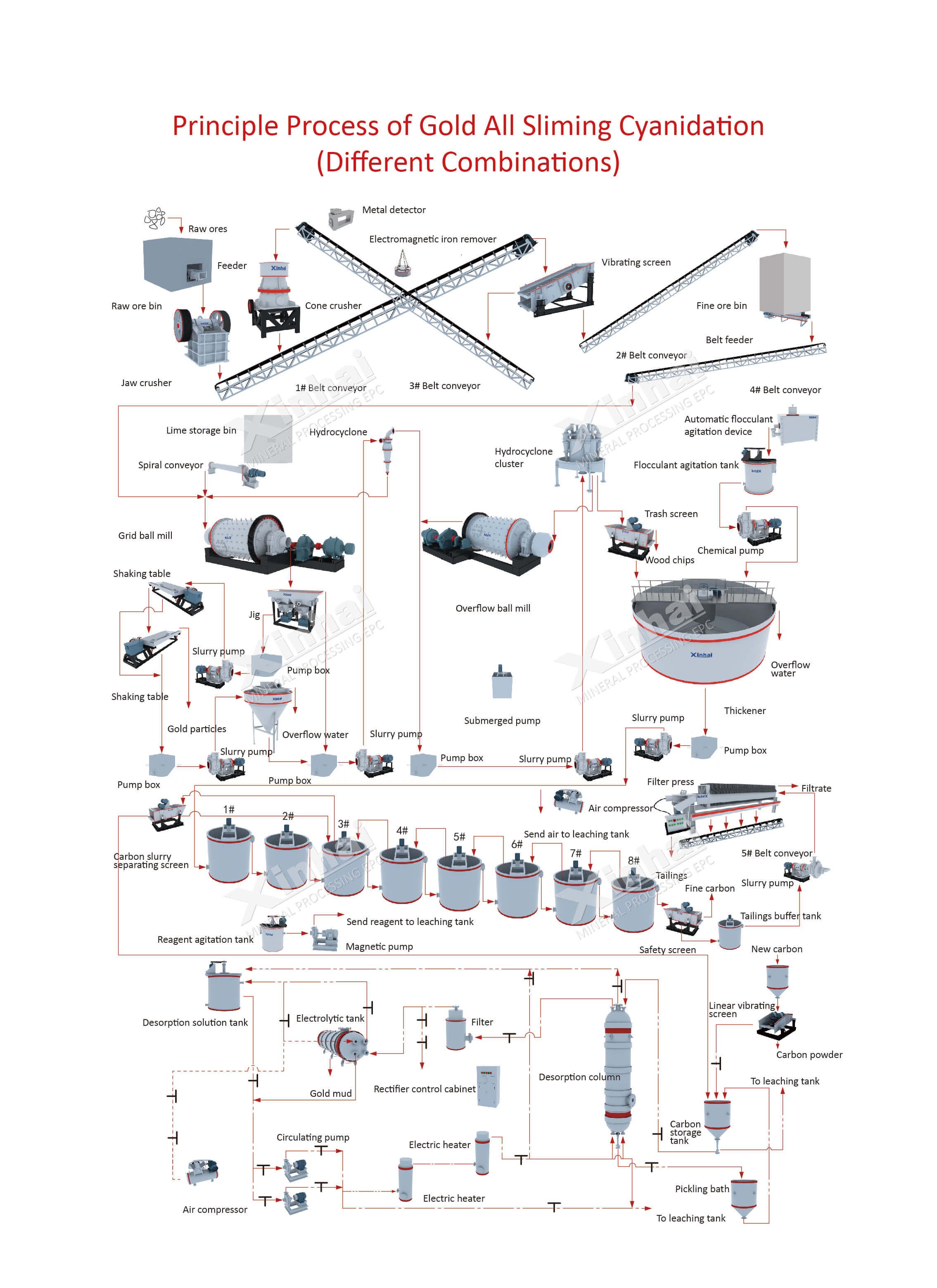
A delivered CIP plant here is not a black box. It is a chain, and each link has a reason.
First, grinding and classification in a closed circuit. The fine laterite has to be ground and sized so the gold is freed, and the oversize returns to the mill instead of escaping with the fines. Then leaching, where the reagent dissolves the gold into solution. Then adsorption, where activated carbon pulls the gold out of the pulp. After that, desorption and electrolysis strip the gold off the carbon, and finally smelting turns it into doré.
| Stage | What happens | Why it matters |
|---|---|---|
| Closed-circuit grinding | Grind and size, return oversize | Frees gold without losing fines |
| Leaching | Dissolve gold into solution | The chemistry step that sets recovery |
| Adsorption (CIP) | Carbon collects the gold | Works with fine, sticky pulp |
| Desorption & electrolysis | Strip gold from carbon | Concentrates gold for the next step |
| Smelting | Melt to doré | Turns gold-in-solution into metal |
This is not a theory. The team behind this article delivered a 3,000-ton-per-day carbon-in-pulp plant in Guinea on a laterite ore that was around 80% powdery clay, carrying free gold at roughly 1.0 gram per ton.
At that throughput, the design decisions stop being academic. The grinding circuit has to stay in balance, the adsorption train has to be sized for the gold loading, and the whole plant has to run through the rainy season without the operators chasing the process. The plant shipped with a full-process intelligent control system for exactly that reason: on a remote site, stability is what keeps a good flowsheet from turning into a bad operation.
The other thing Guinea teaches you is that distance punishes a fragmented project. When the ore test, the flowsheet, the equipment, the build, and the start-up all belong to different companies, every problem becomes a round of finger-pointing that is twice as expensive when the site is a flight and a long drive away.
A single team that carries the whole thing, from ore test to commissioning, has no gap to fall into. That is what EPC is supposed to mean in a place like this.
The laterite ore is fine and sticky, and CIP collects gold with carbon instead of relying on settling, so it handles that feed well.
Closed-circuit grinding, leaching, carbon adsorption, desorption, electrolysis, and smelting to doré.
The ore weathers into fines. Grinding and returning the oversize frees the gold without letting fines run away with the recovery.
On a remote site with a small operator pool, a full-process control system keeps recovery steady and stops small errors from compounding.
Yes. The team behind this article has delivered a 3,000-ton-per-day CIP gold plant in Guinea, running on laterite ore.
If you are planning a gold processing plant in Guinea, the smartest first move is an ore test that tells you which flowsheet your deposit actually needs, and a team that can carry it from design to commissioning.
Send the details of your ore and throughput, and our team can help you work out the right route before you commit!
 008613683147042
 xhcnlite@xinhaimining.com

No. 188, Xinhai Street, high-tech Industrial Park, Fushan District, Yantai, Shandong, China.
Please leave your message here! We will send detail technical info and quotation to you!

 Home
 Online Service