
Mineral Processing Reagents

-
 E-mail
xhcnlite@xinhaimining.com
E-mail
xhcnlite@xinhaimining.com
-
 Call Us
008613683147042
Call Us
008613683147042
E-mail
xhcnlite@xinhaimining.com
Call Us
008613683147042
2026-07-30 Views: 263
Warm Tip: If you want to know more information, like quotation, products, solutions, etc., please Click here ,and contact us online.
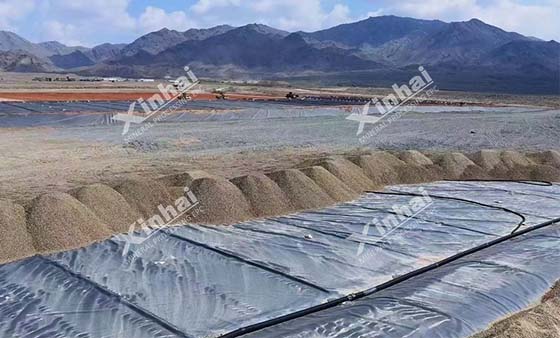
Gold heap leaching is a hydrometallurgical process in which crushed ore is stacked on an engineered pad and irrigated with a gold leaching solution. The dissolved gold-bearing solution is collected and processed through adsorption or recovery circuits. It is generally most suitable for low-grade, large-tonnage deposits where building a conventional milling plant may not deliver the best economic return.
Unlike traditional milling, heap leaching minimizes crushing, grinding, and tailings handling requirements. This significantly reduces capital investment while allowing mines to process large ore volumes.
| Heap Leaching | Conventional Gold Plant |
|---|---|
| Lower CAPEX | Higher CAPEX |
| Lower energy demand | High grinding energy |
| Longer leaching cycle | Faster recovery |
| Suitable for low-grade ores | Better for high-grade ores |
| Simpler operation | More complex operation |
Field engineers frequently find that project economics are determined more by ore permeability than by head grade alone. A highly permeable 0.7 g/t ore may outperform a poorly permeable 1.2 g/t ore.
Ore suitability depends on mineralogy, permeability, clay content, oxidation state, particle size distribution, and gold liberation rather than grade alone. Laboratory bottle-roll and column tests should always precede commercial-scale design.
Typical candidates include:
| Ore Type | Suitability |
|---|---|
| Oxide gold ore | Excellent |
| Weathered ore | Very Good |
| Transitional ore | Moderate |
| High-clay ore | Challenging |
| Sulfide ore | Usually Limited |
| Carbonaceous ore | Requires testing |
Typical field experience shows that high-clay ores often suffer from channeling and poor solution distribution, reducing overall extraction despite favorable laboratory results.
Never select heap leaching based only on assay values. Hydraulic behavior is equally important.
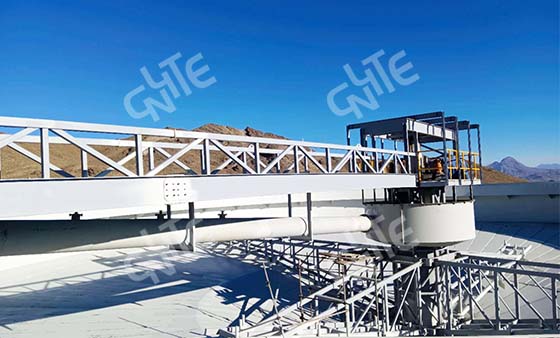
Gold heap leaching consists of sequential engineering steps that maintain efficient solution flow while maximizing gold dissolution.
Mining
│
Primary Crushing
│
Agglomeration (if required)
│
Heap Stacking
│
Solution Irrigation
│
Gold Dissolution
│
Pregnant Solution Collection
│
Gold Recovery (CIP/CIL/Carbon)
│
Refining
Each stage influences downstream recovery. During commissioning, operators often discover that improving irrigation uniformity produces larger recovery gains than increasing reagent concentration.
| Stage | Primary Objective |
|---|---|
| Crushing | Create optimal particle size |
| Agglomeration | Improve permeability |
| Stacking | Maintain heap stability |
| Irrigation | Uniform solution distribution |
| Collection | Prevent solution loss |
| Recovery | Capture dissolved gold |
Heap leaching performance depends on maintaining a balance between chemical reactions and fluid movement. Improving one while neglecting the other rarely increases recovery.
Major operating factors include:
| Factor | Effect |
|---|---|
| Crush size | Surface area vs permeability |
| Heap height | Recovery vs solution pressure |
| Irrigation rate | Contact time |
| Ore permeability | Solution flow |
| pH control | Reagent efficiency |
| Temperature | Reaction kinetics |
| Reagent selection | Dissolution efficiency |
In real plant operation, excessive irrigation often causes preferential flow channels. More solution does not necessarily mean higher recovery.
Stable hydraulic conditions generally outperform aggressive operating parameters.
The extraction of gold increasingly depends on balancing metallurgical performance, operating safety, environmental expectations, and regulatory compliance. Mines therefore evaluate reagent performance across multiple criteria rather than recovery alone.
| Selection Criteria | Importance |
|---|---|
| Gold recovery | High |
| Consumption rate | High |
| Environmental profile | High |
| Worker safety | High |
| Transportation | Medium |
| Regulatory acceptance | High |
Many operations are evaluating eco-friendly gold leaching reagents as potential alternatives where regulations, permitting requirements, or ESG objectives make conventional solutions more challenging. The appropriate reagent should always be validated through laboratory and pilot testing before plant implementation.
Selecting a reagent solely because another mine reports good performance. Every ore body behaves differently.
Most recovery losses originate from engineering and operational issues rather than chemistry.
| Problem | Likely Cause | Practical Solution |
|---|---|---|
| Low recovery | Poor permeability | Improve agglomeration |
| Channeling | Uneven stacking | Better heap construction |
| Slow leaching | Large particle size | Optimize crushing |
| Ponding | Excess irrigation | Reduce application rate |
| Carbon losses | Poor solution quality | Improve filtration |
| Solution leakage | Pad damage | Strengthen liner inspection |
Field engineers frequently observe that solving one bottleneck without investigating upstream causes rarely produces sustainable improvements.
The decision should consider total project economics rather than recovery percentage alone.
| Decision Factor | Heap Leaching | Milling Plant |
|---|---|---|
| Initial investment | Lower | Higher |
| Operating complexity | Lower | Higher |
| Gold recovery | Moderate–High | High |
| Construction period | Shorter | Longer |
| Energy consumption | Lower | Higher |
| Water demand | Lower | Higher |
A milling plant may recover more gold, but higher capital and operating costs can reduce overall project value. Conversely, heap leaching may produce stronger returns for suitable low-grade deposits because it enables profitable treatment of material that would otherwise remain uneconomic.
The best process is the one that maximizes life-of-mine value, not necessarily laboratory recovery.
Consistent operational discipline usually delivers greater benefits than frequent process changes.
Best-practice checklist
| Practice | Benefit |
|---|---|
| Conduct detailed ore characterization | Better design decisions |
| Perform column testing | Reliable scale-up |
| Control particle size | Stable permeability |
| Monitor irrigation uniformity | Higher recovery |
| Inspect liners regularly | Environmental protection |
| Optimize reagent dosage | Lower operating cost |
| Track solution chemistry | Stable production |
| Review heap performance routinely | Continuous improvement |
During long-term operation, regular permeability monitoring often identifies declining performance before recovery losses become significant.
Gold heap leaching remains one of the most economical methods for extracting gold from suitable low-grade deposits. Successful projects depend on understanding ore characteristics, designing stable heap hydraulics, selecting appropriate leaching reagents, and maintaining disciplined operational control throughout the mine life.
For mine owners evaluating a new gold plant, expanding production, or improving the extraction of gold from existing operations, laboratory testing and engineering design should guide every major decision. If you are assessing eco-friendly gold leaching reagents such as CNLITE or planning a customized gold processing solution, our engineering team can help evaluate your ore, optimize reagent selection, and develop a practical process that supports long-term operational performance.
 008613683147042
 xhcnlite@xinhaimining.com
No. 188, Xinhai Street, high-tech Industrial Park, Fushan District, Yantai, Shandong, China.
Please leave your message here! We will send detail technical info and quotation to you!

 Home
Home Online Service