
Mineral Processing Reagents

-
 E-mail
xhcnlite@xinhaimining.com
E-mail
xhcnlite@xinhaimining.com
-
 Call Us
008613683147042
Call Us
008613683147042
E-mail
xhcnlite@xinhaimining.com
Call Us
008613683147042
2026-04-30 Views: 1212
Warm Tip: If you want to know more information, like quotation, products, solutions, etc., please Click here ,and contact us online.
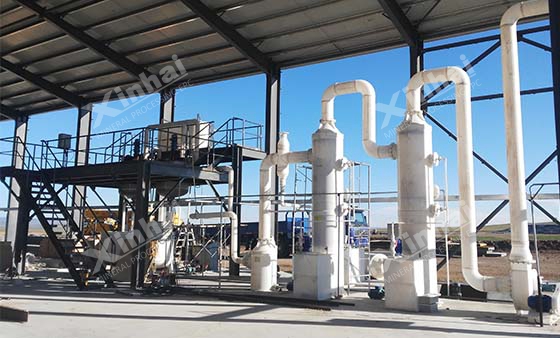
In many gold plants, crushing works fine. Grinding works fine. Leaching looks good on paper. Lab reports show strong gold concentration in solution.
But when the final gold bars are poured, the output is always slightly lower than expected.
One percent lower may not sound serious.
But if your plant produces 2,200 kg of gold per year, 1–3% loss means 22–66 kg missing. That is not a technical detail. That is profit.
This final step is controlled by the GOLD ELECTROWINNING CELL.
It is not just a box with power cables.
It is where dissolved gold finally becomes solid metal.
Below is a simplified comparison from a mid-sized plant (3,000 TPD):
| Item | Designed Value | Actual Operation | Difference |
|---|---|---|---|
| Annual Gold Output | 2,200 kg | 2,134 kg | -66 kg |
| Electrowinning Recovery | 97% | 94% | -3% |
| Energy Use per kg | 2,600 kWh | 3,150 kWh | +550 kWh |
| Cathode Cleaning Interval | 5 days | 9 days | Irregular |
No major breakdown occurred.
No equipment failure was reported.
But over one year, 66 kg of gold was not recovered efficiently.
This is how losses usually happen — quietly.
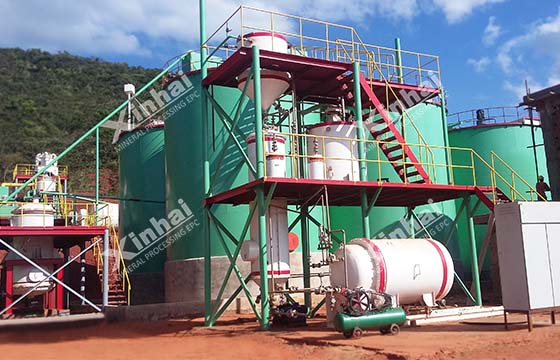
Forget complicated chemistry.
ELECTROWINNING FOR GOLD simply means using electricity to pull dissolved gold from solution and deposit it onto cathode plates.
But here is the key:
Too much current → unstable deposition
Too little current → slow recovery
Unstable voltage → gold sludge loss
Control is more important than speed.
If you are not deeply technical, you can still check your system using this simple table:
| Symptom | What You See | Possible Impact |
|---|---|---|
| Cathode surface turns dark | Uneven gold layer | 1–3% recovery loss |
| Current fluctuates often | Sludge falls off | Long-term instability |
| Cleaning interval too long | Cathode passivation | Lower efficiency |
| Old rectifier system | High electricity bill | 15–25% higher energy cost |
Sometimes the plant “looks normal.”
But numbers quietly drift downward.
That slow loss is dangerous because nobody notices immediately.
Look at the second chart above.
Gold recovery peaks around 150 A/m².
When current density increases to 200–250 A/m², recovery drops.
Many operators believe increasing current means faster production.
In reality:
High current creates rough deposits
Short circuits become frequent
Cathode life shortens
Stable operation at the right current density often improves annual gold output more than pushing maximum power.
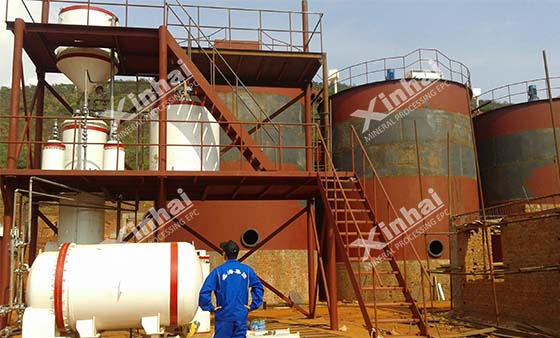
Electricity is often underestimated.
Below is a simple annual comparison for a 3,000 kg/year plant:
| Rectifier Type | Energy Use (kWh/kg) | Annual Energy (kWh) | Relative Cost Impact |
|---|---|---|---|
| Older Model | 3,200 | 9,600,000 | High |
| Modern System | 2,500 | 7,500,000 | 20–25% Lower |
That difference of 2.1 million kWh per year directly impacts operating cost.
Electrowinning efficiency is not just about recovery rate — it is also about long-term energy control.
A GOLD ELECTROWINNING CELL does not work alone.
Its performance depends on:
Stable gold concentration in eluate
Temperature control (40–60°C is typical)
Low impurity levels
Reliable power supply
If upstream desorption fluctuates, the electrowinning cell cannot perform consistently.
This is why simply replacing equipment often does not solve the issue.
The whole recovery section must be evaluated together.
You do not need to be an engineer to notice warning signs:
Gold sludge texture changes frequently
Cathode cleaning schedule becomes irregular
Production reports show small but consistent deviation from theoretical recovery
If two of these happen together, the system likely needs optimization.
Small improvements of 1–2% recovery can equal tens of kilograms per year.
1. What is a good recovery rate for a GOLD ELECTROWINNING CELL?
Typically 92–98%, depending on system stability and control.
2. How long does ELECTROWINNING FOR GOLD take?
Usually 8–24 hours per cycle.
3. Is higher current always better?
No. Around 150 A/m² is often more stable than extreme values.
4. Can small mines use electrowinning effectively?
Yes. Modular systems are suitable for 500–1,000 TPD plants.
5. How often should cathodes be cleaned?
Normally every 5–7 days, depending on load.
Your electrowinning system may still be running.
But is it running at its best?
The GOLD ELECTROWINNING CELL is the final gate before revenue.
If this gate leaks even slightly, the impact multiplies over years.
We specialize in:
GOLD ELECTROWINNING CELL performance diagnostics
ELECTROWINNING FOR GOLD optimization
Customized solutions for complete gold processing plants
Not just equipment supply.
Not just theory.
If you want to understand whether your plant is operating at maximum efficiency, contact us today.
A small technical adjustment today may become a major profit difference tomorrow.
 008613683147042
 xhcnlite@xinhaimining.com
No. 188, Xinhai Street, high-tech Industrial Park, Fushan District, Yantai, Shandong, China.
Please leave your message here! We will send detail technical info and quotation to you!

 Home
Home Online Service