
Mineral Processing Reagents

-
 E-mail
xhcnlite@xinhaimining.com
-
 Call Us
008613683147042
E-mail
xhcnlite@xinhaimining.com
Call Us
008613683147042
 Home
Guides
Helpful Guide
Can you Replace Sodium Cyanide in Gold Processing? A Practical Guide to Ore Testing, Leaching Applications and Operating Costs
2026-11-27 Views: 17
Warm Tip: If you want to know more information, like quotation, products, solutions, etc., please Click here ,and contact us online.
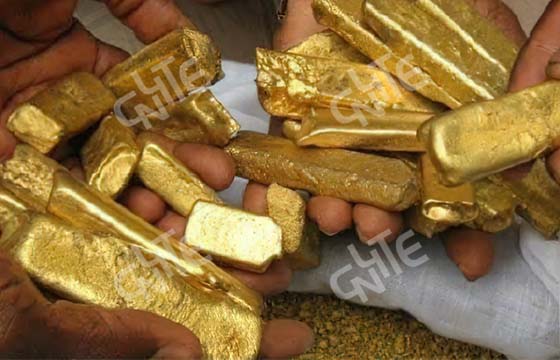
The question is not whether a non-cyanide reagent can dissolve gold. It can. The real question is whether it makes sense for your ore, your plant, your permit, and your budget. That answer never comes from a brochure. It comes from working through five things in order: ore testing, the leaching application, operating cost, safety and environment, and the purchase decision itself. This guide walks the whole chain, so you can decide with your own numbers instead of someone else's claims.
Gold does not leach the same from every ore. A clean oxide gives it up in hours. A sulfide or carbonaceous ore fights back, and a high-copper feed quietly eats whatever reagent you add. Before you compare CNLITE against sodium cyanide, you need to know what you are actually feeding.
A proper test is a side-by-side run on your own material. Same grind, same water, same time, same pH. Change only the reagent. Then measure head grade and residue grade, and record the dosage each one actually consumed. That single result tells you more than any spec sheet, because it is your ore doing the talking.
Not every circuit treats CNLITE and cyanide the same way. Tank leaching, heap leaching, and carbon-in-pulp each respond a little differently, and the reagent has to fit the flowsheet, not just the ore.
On a clean oxide tank leach, the swap is usually straightforward and the numbers come close to cyanide. On a heap, permeability and contact time matter more, so the reagent has to stay effective through the whole pad. On carbon-in-pulp, the loaded solution has to keep the gold available for the carbon to grab. The right reagent is the one that holds recovery steady across your specific application, which is why a bench test is only the start, not the finish.
This is where most decisions go wrong. A cheaper price per kilogram can hide a higher cost per recovered ounce if the reagent needs a bigger dose or drags down recovery.
Run the number that matters: total reagent spend divided by recovered gold, at steady recovery. A reagent that costs half as much but needs double the dose is not cheaper. And one that trims 10% off your chemical bill while dropping recovery by 1% is a slow-motion loss, because that missing 1% is gold you already paid to mine.
| Cost view | What it tells you |
|---|---|
| Price per kilogram | Almost nothing on its own |
| Dosage actually consumed | Whether the cheap option stays cheap |
| Cost per recovered ounce | The only comparison that matters |
| Recovery at that cost | Whether savings survive the leach |
A lot of plants switch reagents for reasons that never show up on a price sheet. Removing sodium cyanide from site means dropping a serious handling and storage risk, and often a big piece of the detox and tailings burden that comes with it.
Those are real savings, but they are site-specific. A plant under tight effluent limits or near a community may value them far more than a remote site with loose rules. The point is to count them honestly in your own numbers, not to let them become a vague selling line.
Pull it together before you sign anything. Does the ore test support the swap on your feed? Does the reagent hold recovery in your application? Is the all-in cost per recovered ounce actually better after safety and permit savings are counted? If any of those answers is missing, the purchase is a bet, not a decision.
That is the whole point of this guide. CNLITE can replace sodium cyanide in a lot of gold processing plants. Whether it should replace it in yours is something only your ore and your numbers can say.
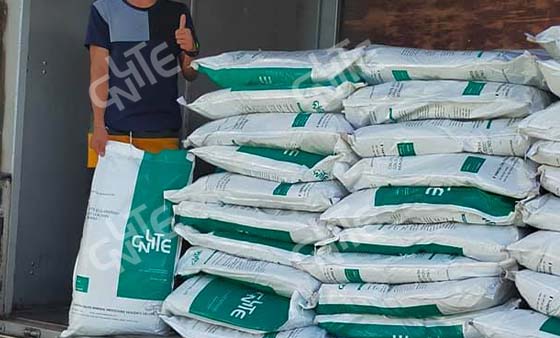
In many oxide circuits, yes, close enough to work. But treat it as a reagent swap that still needs a side-by-side test on your own ore, not a one-for-one promise.
Comparing on price per kilogram and skipping the ore test. The only number that matters is cost per recovered ounce at steady recovery.
It can, but those ores are demanding for any reagent. A controlled test is the only way to know for your material.
For many plants, yes, through lower handling risk and simpler tailings and permitting. But the value depends on your site and your permit, so count it in your own numbers.
With an ore test. Send your ore type, head grade, and any existing test data, and get a side-by-side comparison before you change anything.
If you are weighing CNLITE against sodium cyanide for your gold processing, the first move is a fair test on your own feed.
Send your ore type, head grade, daily throughput, and any test data you have, and our CNLITE team can help you to decide!
Just do it now!
 008613683147042
 xhcnlite@xinhaimining.com

No. 188, Xinhai Street, high-tech Industrial Park, Fushan District, Yantai, Shandong, China.
Please leave your message here! We will send detail technical info and quotation to you!

 Online Service