
Mineral Processing Reagents

-
 E-mail
xhcnlite@ytxinhai.com
E-mail
xhcnlite@ytxinhai.com
-
 Call Us
008613641173523
Call Us
008613641173523
E-mail
xhcnlite@ytxinhai.com
Call Us
008613641173523
2025-12-08 Views: 845
Warm Tip: If you want to know more information, like quotation, products, solutions, etc., please Click here ,and contact us online.
.png "Gold-Heap-Leaching")
Understanding Heap Leaching: A Quick Overview
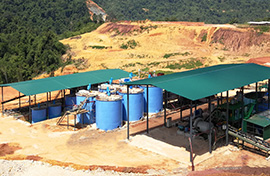
Heap leaching is a common method that mining teams use to pull valuable metals, mainly gold and copper, out of ore. The idea behind it is simple. Workers crush the ore into smaller pieces, stack it into tall heaps, and then pour or spray a chemical solution over the piles. The liquid slowly moves through the heap, dissolving the metal. Later, the metal-rich solution is collected at the bottom and sent for further processing.
This technique is commonly used in low-grade ore. Many African mines, for example, in Ghana or Tanzania, operate with ore that contains only a small amount of metal. Traditional extraction methods would be too costly or complicated.
However, there has long been a worry about the chemicals used in this method. Some of them can be harmful if they leak into rivers or soil. People who live near mining sites often voice these concerns. Because of this, researchers and mining companies have been pushing for safer and more eco-friendly alternatives. The mining world is slowly shifting toward chemical solutions that achieve the same results but with far less environmental damage.
For decades, cyanide has been the main chemical used in heap leaching. It reacts with gold and other precious metals to form a solution that can be easily collected. Many older mines rely on cyanide because it has a long history and a high success rate.
The advantage of cyanide is its strong ability to dissolve gold. It can capture even tiny amounts of precious metals from ore, making it valuable for operations where metal grades are low. However, it has a fatal flaw: cyanide is extremely toxic. A small mistake—like a spill or leak—can pollute water, kill local fish, or cause serious health problems. Some countries, like parts of Europe, have banned cyanide use in mining. Others, including regions in Africa, enforce strict rules on storage, use, and disposal.
Because of these dangers, mines are actively looking for chemicals that work well but do not put workers or the environment at high risk.
| Property | Cyanide | Cnlite (Eco-Friendly Alternative) |
|---|---|---|
| Toxicity | Highly toxic, poses significant risk to environment and health | Non-toxic or low-toxicity |
| Biodegradability | Poor, can produce harmful by-products | Biodegradable |
| Metal Recovery Efficiency | High, especially effective for low-grade ores | Good recovery rates for gold, silver, and other metals |
| Environmental Risk | Spills cause severe contamination | Significantly reduced environmental risk |
| Regulatory Trend | Banned or strictly regulated in some regions | More compliant with increasingly stringent environmental regulations |
Table 1: Comparison of Primary Heap Leaching Chemicals
Cnlite is a modern alternative created to replace cyanide in heap leaching. It is non-toxic, biodegradable, and does not create the dangerous by-products that cyanide does. This makes it much safer for land, water, and communities around mining sites.
Cnlite has several other advantages. For example, it is less harmful to fish and plants. It stays stable during storage. And it has shown strong performance in recovering both gold and silver from different types of ores. In real operations—such as small gold mining plants in West Africa—Cnlite has helped reduce environmental risks while maintaining good recovery rates.
By using Cnlite, mining companies lower their chances of contamination incidents. This also helps them meet stricter environmental rules, which more countries are adopting. In my experience reading field reports, many operators say they feel more at ease working with Cnlite compared to cyanide because the safety margin is higher.
Alongside cyanide or Cnlite, mines often use other chemicals to support the heap leaching process.
Lime is used mainly to control pH levels. A stable pH makes leaching more efficient. Lime can also reduce the harmful effects of some chemicals. When using cyanide or Cnlite, proper pH control helps keep the reactions stable and predictable. In the hot climate of places like Burkina Faso, lime is especially important because high temperatures can affect chemical reactions.
Ammonium thiosulfate is another helpful chemical. It improves how gold and silver separate from ore. It breaks the connection between the metal and the rock, making it easier for the main leaching chemical to dissolve the metal. When used together with cyanide or Cnlite, ammonium thiosulfate increases the recovery rate and shortens the leaching time.
These supporting chemicals may not get as much attention, but they are very important. They help the main leaching agent—whether cyanide or Cnlite—work more efficiently and with fewer side effects.
| Chemical | Primary Function | Application Note |
|---|---|---|
| Lime | Controls pH levels to stabilize chemical reactions | Enhances efficiency of primary leachant; crucial in hot climates (e.g., Burkina Faso) |
| Ammonium Thiosulfate | Promotes separation of metal from ore | Used with cyanide or Cnlite to increase recovery rate and shorten leaching time |
Table 2: Supporting Chemicals in Heap Leaching
As more governments and communities push for greener mining, the industry is adapting. Mines now look for chemicals and methods that reduce harm. Eco-friendly solutions like Cnlite are growing in demand.
Innovation is happening fast. Some new projects try to use less water. Others aim to reuse the leaching solution many times instead of throwing it away. There are also new spraying systems that spread chemicals more evenly, reducing waste. In countries like Canada and Australia, several mines have tested these newer systems. Results show that metal recovery can stay high even while the environmental footprint becomes smaller.
These changes show a clear direction: future heap leaching will blend strong performance with better ecological care.
| Aspect | Traditional Focus | Eco-Innovation Trend |
|---|---|---|
| Primary Leachant | Reliance on cyanide | Shift to non-toxic, biodegradable alternatives like Cnlite |
| Water Usage | High consumption | Water reduction and solution recycling |
| Application Method | Conventional spraying | Advanced systems for even distribution and reduced waste |
| Operational Goal | Cost and recovery rate as core priorities | Maintaining high recovery while minimizing environmental footprint |
Table 3: Traditional Practices vs. Eco-Friendly Innovations
Cnlite is becoming one of the most promising tools for safer heap leaching. Because it is non-toxic and biodegradable, it gives mines a real chance to reduce their negative impact. As more regions introduce strict environmental rules, Cnlite helps companies meet those standards without losing efficiency.
It also gives peace of mind to communities and workers. Many mining operators, especially in developing regions, want a method that performs well but is easier to manage. Cnlite fits that need. It supports sustainable mining and prepares companies for a future where environmental responsibility will be even more important.
| Advantage Category | Key Benefits |
|---|---|
| Environmental Safety | Non-toxic, biodegradable, minimal hazard to soil, water, and biota |
| Operational Safety | Lower risk of spills/contamination; stable storage; enhances safety for workers and communities |
| Regulatory Compliance | Helps mines meet stringent and evolving global environmental standards |
| Technical Performance | Effective for gold, silver, and other metals; adaptable to various ore types and climates (e.g., Africa, Asia) |
| Industry Reception | Field reports confirm maintained recovery rates, positioning it as a key solution for sustainable mining |
Table 4: Advantages of Cnlite as an Eco-Friendly Alternative
Heap leaching is a technique where crushed ore is poured into large heaps. A chemical solution is applied, dissolving metals like gold. This metal-rich solution is collected and processed. Both cyanide and Cnlite are common chemicals used for this purpose.
It depends on the chemicals used. Cyanide-based heap leaching has risks. Eco-friendly alternatives like Cnlite lower toxicity and reduce environmental danger, making the process safer for both workers and nearby communities.
Cnlite is biodegradable, non-toxic, and still efficient at recovering gold. It removes many of the danger factors linked with cyanide while keeping the extraction performance strong.
They reduce damage to soil and water, improve worker safety, and simplify chemical handling. Cnlite and similar products also help mines meet modern environmental regulations.
Yes. Cnlite works with gold, silver, and other precious metals. It can adapt to different ores and different climates, which makes it suitable for operations across Africa, Asia, and beyond.
If you want safer and greener heap leaching, reach out to us. We can help you learn more about Cnlite and guide you toward a customized, environmentally responsible leaching solution. Your sustainable mining project can start today.
 008613641173523
 xhcnlite@ytxinhai.com
No. 188, Xinhai Street, high-tech Industrial Park, Fushan District, Yantai, Shandong, China.
Please leave your message here! We will send detail technical info and quotation to you!

 Home
Home Online Service