
Mineral Processing Reagents

-
 E-mail
xhcnlite@ytxinhai.com
E-mail
xhcnlite@ytxinhai.com
-
 Call Us
008613683147042
Call Us
008613683147042
E-mail
xhcnlite@ytxinhai.com
Call Us
008613683147042
2026-02-26 Views: 427
Warm Tip: If you want to know more information, like quotation, products, solutions, etc., please Click here ,and contact us online.
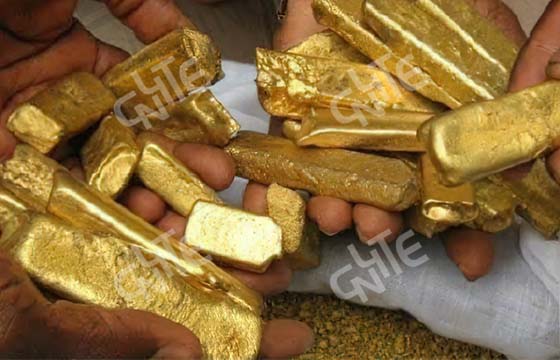
In engineering practice, the first step of gold extraction isn't building a gold plant. It's figuring out where the hell the gold is actually hiding.
Different occurrence states determine the upper limit of your extraction. Period.
How Gold Occurrence Impacts Your Extraction
| Gold Occurrence Form | Common Problem | Direct Impact on Gold Extraction |
|---|---|---|
| Free gold | Uneven particle size | Easy to recover, but fine particles escape easily |
| Encapsulated gold | Wrapped in sulfides | Direct leach recovery sucks |
| Micro-fine gold | Microscopic dispersion | Needs longer leach time |
| Carbonaceous ore | Carbon absorbs gold | Gold gets "robbed," recovery drops |
Bottom line:
If you don't understand your ore, even the most advanced gold plant is just a more expensive trial-and-error tool.
There are plenty of processes on paper. But in actual gold plants, the paths that have been repeatedly proven? Not that many.
Mainstream Gold Extraction Processes Compared
| Process Route | Applicable Ore | Advantages | Limitations |
|---|---|---|---|
| Gravity Separation | Coarse free gold | Low cost, quick results | Useless for fine gold |
| CIP/CIL | Low to medium grade | Mature and stable | Requires careful reagent management |
| Heap Leaching | Low grade | Low investment | Slow recovery cycle |
| Pre-oxidation + Leaching | Refractory ore | Boosts recovery | Complex operation |
Real-talk advice:
Stop obsessing over "which one is the most advanced." Ask yourself instead:
Given my ore conditions, which gold extraction method is the most controllable and stable?
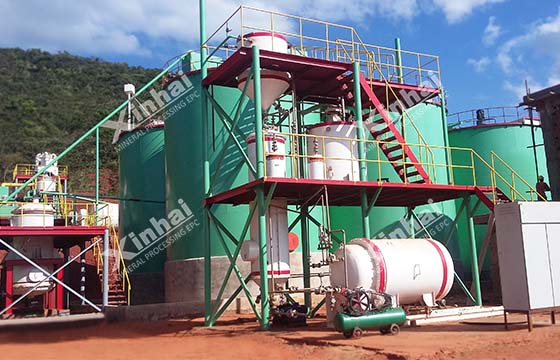
Here's what I see all the time: People obsess over initial investment but completely ignore the structural costs of running a gold plant.
Where Your Gold Plant Actually Bleeds Money
| Module | Common Mistake | Actual Impact |
|---|---|---|
| Crushing System | Chasing maximum throughput | Energy consumption and maintenance explode |
| Grinding System | Grinding too fine | Reagent consumption up, slime issues appear |
| Leaching System | Insufficient retention time | Gold doesn't get enough time to dissolve |
| Adsorption System | Poor carbon management | Gold disappears into the tailings |
Here's how you judge a good gold plant:
It's not about looking complicated. It's about running for three years and still hitting targets consistently.
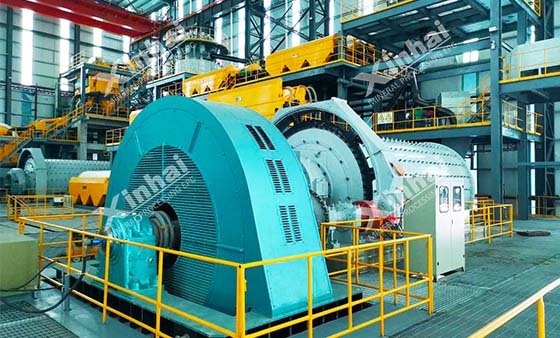
In many failed projects, the problem wasn't the process. It was that the reagent system didn't match the ore.
How Reagent Choice Actually Affects Your Extraction
| Dimension | What Happens When It's Mismatched | What You See on Site |
|---|---|---|
| Leaching Efficiency | Gold dissolves slowly | Recovery rate tanks |
| Selectivity | Too many side reactions with impurities | Reagent consumption spikes |
| Stability | Process keeps fluctuating | Operators hate their lives |
| Safety | Higher risk profile | Regulatory headaches multiply |
This is exactly why more gold plants are moving away from "copy-paste recipes" and toward customized extraction solutions.
Let's be blunt: In today's world, environmental performance in gold extraction isn't a "nice to have." It's literally the difference between operating and being shut down.
How Environmental Factors Drive Gold Plant Design
| Environmental Requirement | Technical Adjustment | What You Actually Gain |
|---|---|---|
| Reduce toxicity | Switch to new leach systems | Faster permitting |
| Lower tailings risk | Simplify the flow sheet | Lower operating costs |
| Water conservation | Closed-loop systems | Reduced water bills |
What reality looks like:
The earlier you bake environmental thinking into your gold extraction design, the less you'll be paying to fix things later.
I've watched these mistakes kill projects. Don't make them.
Doing only lab tests, skipping pilot trials
Chasing the last 5% recovery while ignoring stability
Designing the gold plant to its absolute limit with no buffer
Ignoring reagent supply and technical support capabilities
These problems only show up after you start production. And by then, fixing them costs a fortune.
Yeah, sodium cyanide works. But the safety costs for transport, storage, and use? They're getting heavier every year.
What changes when you switch:
Safety: No more cyanide regulations breathing down your neck
Environment: Tailings risk drops, community relations improve
Technical: Some new reagents actually outperform cyanide on high-arsenic or high-carbon ores
Traditional gold plant construction takes forever and locks you in. Mobile gold plants package everything into containers you can truck to site and install in days.
Why this matters:
Perfect for exploration—fund your next stage with produced gold
Process at the mine, skip the trucking costs
One site done? Pack up and move to the next
Ideal for those small high-grade veins that don't justify a big plant
Here's what mature projects all have in common:
Gold extraction is treated as a dynamic optimization process, not a one-time design decision.
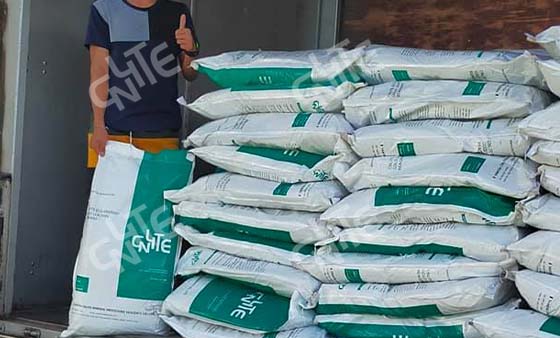
More mines are choosing deep collaboration with technology partners, not just buying equipment or chemicals off the shelf. In this trend, companies like CNLITE—who focus on the synergy between gold extraction technology and reagent optimization—are getting picked more often.
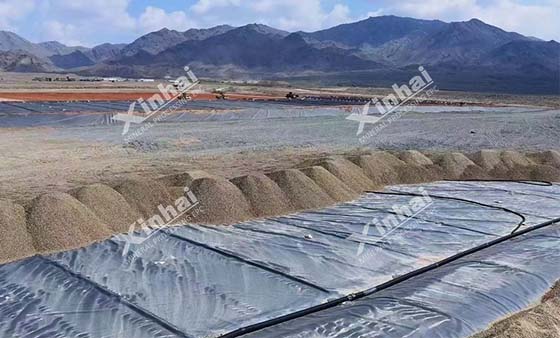
Heap leaching can be economical for ore under 1 g/t. But before you commit, check two things: First, your ore needs decent permeability—too many fines and the solution won't flow. Second, the gold particles need to be fine enough for the solution to reach them. Run column leach tests first. Simulate real conditions. And for god's sake, design your liner system properly—environmental leaks here will destroy you.
If you're processing moderate-grade free-milling ore and watching your budget, CIL wins. Fewer tanks, simpler layout, lower cost. But if your ore grade is solid and you want every gram of gold out, CIP's higher initial cost pays off through better carbon management and recovery. Do comparative tests. Let the data decide.
Yes—and they already have, in real mines, at scale. Products like the CNLITE series are non-hazardous and often outperform cyanide on difficult ores (high arsenic, high copper). But "often" isn't "always." Test against your specific ore. And remember: switching also simplifies transport, storage, and long-term environmental liability. That's real money.
If sulfides are locking up your gold, direct leaching will disappoint you—sometimes below 30% recovery. You need pre-treatment: bio-oxidation, pressure oxidation, or roasting. Yes, it adds cost. But it's the only way to make the project work. Choose the method based on your mineralogy, budget, and local environmental rules.
Step one: Metallurgical tests to confirm process and expected recovery. Step two: Add up everything—mining, plant construction, operation, tailings, environmental compliance. Step three: Run the numbers against today's gold price. IRR? Payback period? And here's the kicker: Talk to the community. Check the regulations. The non-technical factors kill projects just as dead as the technical ones.
If you're planning or optimizing a gold plant, stop asking "which template process should I pick?"
Ask:
What limits my ore?
Where's the bottleneck in my gold extraction?
Which parameters are worth optimizing over the long haul?
Why walk down the same dead ends everyone else did? Start with a solution built for your ore.
Get a customized solution for your gold extraction challenges. Talk to our technical team. Let's build a gold plant that actually delivers long-term value.
 008613683147042
 xhcnlite@ytxinhai.com
No. 188, Xinhai Street, high-tech Industrial Park, Fushan District, Yantai, Shandong, China.
Please leave your message here! We will send detail technical info and quotation to you!

 Home
Home Online Service