
Mineral Processing Reagents

-
 E-mail
xhcnlite@ytxinhai.com
E-mail
xhcnlite@ytxinhai.com
-
 Call Us
008613683147042
Call Us
008613683147042
E-mail
xhcnlite@ytxinhai.com
Call Us
008613683147042
 Home
Guides
Helpful Guide
How to Process Fluorite Ore? A Practical Guide to Flotation for 4 Ore Types
Home
Guides
Helpful Guide
How to Process Fluorite Ore? A Practical Guide to Flotation for 4 Ore Types
2026-02-27 Views: 396
Warm Tip: If you want to know more information, like quotation, products, solutions, etc., please Click here ,and contact us online.
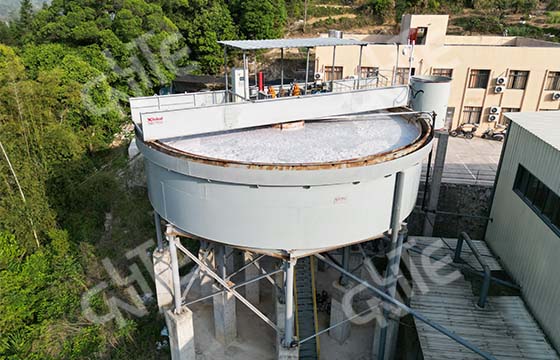
The go-to method today is flotation. Simple idea: use differences in how minerals behave in water. Make fluorite "float" while useless gangue minerals "sink." But here's the thing—not all fluorite ores are the same. The "impurities" inside determine your game plan. Based on years in the field, we sort fluorite ores into four types and treat each one differently.
This is the most common type. Mainly fluorite and quartz, sometimes with a little calcite or sulfides.
How It's Done: Standard flow: one grind → one roughing → regrind the rough concentrate → multiple cleaning stages. Goal is to kick out quartz.
Reagents: Soda ash adjusts pH to 8-9 (slightly alkaline). Fatty acids (like oleic acid) collect fluorite. Sodium silicate depresses quartz.
The Catch: Sodium silicate dosage has to be just right. Too little, quartz isn't suppressed. Too much, it depresses fluorite too—killing your recovery.
Practical Tip: Add helpers like alum or aluminum sulfate. The aluminum ions boost quartz suppression without overdosing silicate. At one mine with high calcium ore, adding aluminum chloride pushed concentrate grade from 97% to 98.5%.
Table 1: Common Reagents for Quartz-Type Fluorite Ore
| Reagent | Main Job | Notes |
|---|---|---|
| Soda Ash | pH control | Keeps pH 8-9 |
| Fatty Acid | Fluorite collector | Makes fluorite float |
| Sodium Silicate | Quartz depressant | Watch dosage carefully |
| Alum | Helper depressant | Boosts quartz suppression |
This is the hardest. Fluorite is calcium fluoride, calcite is calcium carbonate. Both are "calcium minerals," surfaces behave too similarly. Reagents get confused.
How It's Done: Regular collectors grab both minerals together. Grade stays low. The trick is picking the right depressant.
When Regular Stuff Fails: Plain sodium silicate often fails. Calcium from calcite dissolves into the water, messing everything up. Surfaces become almost identical. Solution? Acidified sodium silicate. It bonds strongly with calcium, kicking collector off calcite surfaces so calcite sinks.
Combos Work Better: A plant in Yunnan had ore with crazy-high calcite. We tried everything. Best combo: acidified sodium silicate + sodium hexametaphosphate + a little tannin. pH around 9, add reagents in order. Concentrate grade stabilized above 98%.
Table 2: Depressant Combos for Fluorite-Calcite Separation
| Combo | Best For | Pros | Cons |
|---|---|---|---|
| Acidified Sodium Silicate | High calcite, when regular fails | Strong calcium bonding, selective | More corrosive |
| Silicate + Hexametaphosphate | Mixed gangue | Depresses calcite, disperses slimes | Costs more |
| Lignosulfonate/Tannin | Complex carbonates | Natural, cheap | Dosage critical |
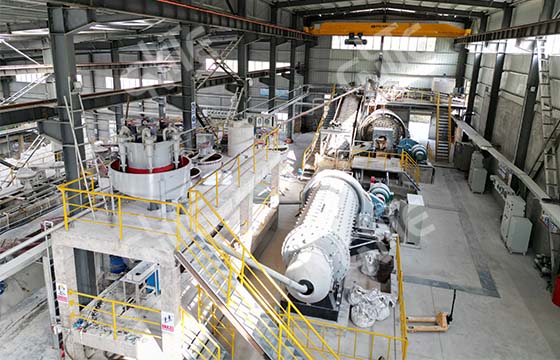
This ore type is a "treasure chest." Besides fluorite, it contains valuable sulfides—copper, lead, zinc minerals. Can't waste those.
How It's Done: Easy-first approach.
Two Steps: Step one: add xanthate collectors, float out sulfides first (get a high-value concentrate). Step two: from the tailings, use fatty acids to float fluorite. Order matters—don't reverse it.
Low Sulfide Content: If sulfides are barely there, building a separate circuit isn't worth it. Just add sodium sulfide to depress them, then float fluorite directly. Sodium sulfide tells sulfides to "shut up" and stay down.
Table 3: Flotation Choices for Sulfide-Fluorite Ore
| Situation | Recommended Flow | Good Parts | Possible Issues |
|---|---|---|---|
| Sulfides valuable | Float sulfides first → then fluorite | Maximum profit | Longer process, higher cost |
| Sulfides low | Depress with Na₂S → float fluorite | Simple, easy | Lose sulfide value |
Both barite and fluorite float easily. Their floatability is similar. Separating them takes work.
How It's Done: Start with bulk flotation. Use oleic acid to float both away from useless gangue, get a mixed concentrate. Then comes the hard part: separation.
Option A: Depress Barite, Float Fluorite (Most Common)
Add organic depressants like dextrin or tannin, plus a little iron salt (ferric chloride). This "wraps up" barite surfaces, depressing them. Then use oleic acid to float fluorite. You get high-grade fluorite and barite concentrates.
Option B: Depress Fluorite, Float Barite (Rare)
Use sodium hydroxide and sodium silicate to depress fluorite. Use alkyl sulfate collectors to float barite first. Then recover fluorite from tailings. But fluorite grade and recovery usually suffer—so this is less common.
Field Tip: Temperature matters. In winter, cold pulp kills reagent performance. Warm it up—keep above 20°C. A plant in Hebei tried this, concentrate grade jumped 1.5%.
Here's the thing: No two fluorite mines are the same. Looks like calcite type? But differences in grain size, impurities, even water hardness—totally different outcomes.
The safe move: before full production, run lab flotation tests on your actual ore. Figure out what you're dealing with. Then match it to your plant equipment and budget. Only then do you get a process that actually makes money.
We've spent years around flotation reagents and equipment. Seen plenty of tricky fluorite ores. If you're stuck on fluorite flotation or want better numbers, give us a shout. The Cnlite team can run custom tests and design reagent plans based on your ore samples. We'll help you find the path that works.
Q1: What's the hardest part of fluorite flotation?
Getting selectivity. When gangue like calcite behaves too much like fluorite, separating them is a headache. Takes finely tuned reagents and multiple cleaning stages.
Q2: Why can't I use the same chemicals for every fluorite mine?
Because the gangue changes. What works for quartz may fail completely on calcite. Your process has to match your ore's specific mineral mix.
Q3: How do I get more fine fluorite particles?
Fine stuff (<10 microns) gets lost easily. Use a dispersant like sodium silicate at controlled doses. High-solids conditioning with collector helps. Also—don't over-grind in the first place.
Q4: Does temperature really matter for barite-fluorite separation?
Yes. Cold kills it. Depressants work way better in warm pulp. Above 20°C makes a real difference.
Q5: Can I recover both fluorite and sulfides from one ore?
Yes. Sequential flotation: float sulfides first (with xanthates), then condition and float fluorite from tailings. Gets you both products, max value.
 008613683147042
 xhcnlite@ytxinhai.com
No. 188, Xinhai Street, high-tech Industrial Park, Fushan District, Yantai, Shandong, China.
Please leave your message here! We will send detail technical info and quotation to you!

 Online Service