
Mineral Processing Reagents

-
 E-mail
xhcnlite@ytxinhai.com
E-mail
xhcnlite@ytxinhai.com
-
 Call Us
008613641173523
Call Us
008613641173523
E-mail
xhcnlite@ytxinhai.com
Call Us
008613641173523
2026-02-11 Views: 1244
Warm Tip: If you want to know more information, like quotation, products, solutions, etc., please Click here ,and contact us online.
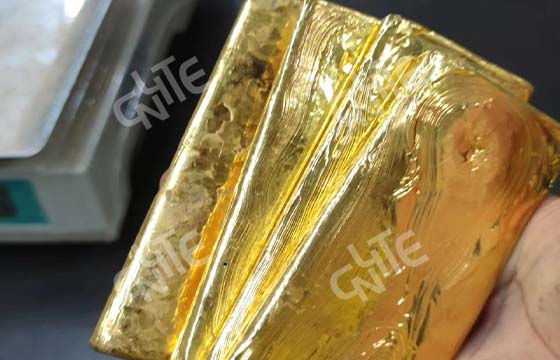
Many first-time investors think the main cost of a gold processing plant is the equipment. Crushers, mills, tanks. That is only part of the story.
In real projects, cost is shaped by three things working together: the ore, the target output, and the site conditions.
| Factor | How it changes the cost |
|---|---|
| Ore type | Decides how complex the extract gold process must be |
| Ore grade | Affects recovery rate and cost per ounce |
| Plant capacity | Bigger scale means higher upfront cost |
| Site location | Impacts power, water, transport, and labor |
| Environmental rules | Adds systems for tailings and water treatment |
Two gold mine projects can look similar on paper. Same region. Same production goal. But their gold plant costs can still be very different. This happens more often than people expect.
To understand where the money really goes, it helps to split the investment into parts.
Below is a realistic structure often seen in mid-sized gold processing plant projects.
| Cost item | Typical share | Notes |
|---|---|---|
| Process equipment | 35–45% | Crushing, grinding, leaching, adsorption |
| Civil works & installation | 20–30% | Foundations, steel, concrete |
| Electrical & automation | 8–12% | Control system, instruments |
| Utilities & services | 10–15% | Water, power, tailings |
| Engineering & commissioning | 5–8% | Design, start-up support |
A common mistake is underestimating civil works. In remote gold mine areas, concrete, steel, and skilled labor cost more. Transport alone can push numbers higher than expected. I’ve seen projects where civil costs quietly passed equipment costs. No one planned for that.
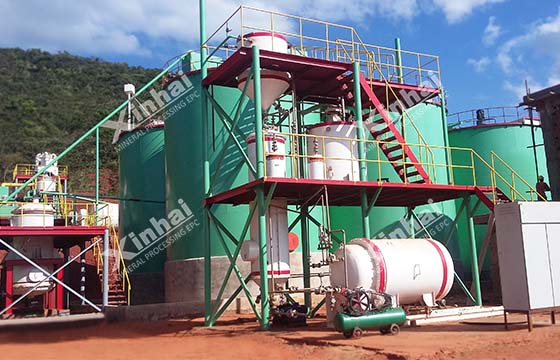
Ore is the heart of everything. The same gold plant design will not work well for every gold mine.
| Ore type | Common process | Cost level |
|---|---|---|
| Oxide ore | CIL / CIP | Lower |
| Mild sulfide | Flotation + CIL | Medium |
| High sulfide | Flotation + oxidation | High |
| Refractory ore | Customized flowsheet | Very high |
For oxide ore, extract gold is usually simpler. The plant layout is cleaner. Fewer steps. Less energy.
For sulfide or complex ore, things change fast. Extra grinding. Extra tanks. Sometimes pressure oxidation or roasting. Each step adds cost, risk, and operating effort.
Skipping proper test work to save money often backfires. Lab and pilot tests may cost tens of thousands. Redesigning a wrong gold processing plant later can cost millions.
Building the gold plant is only the first chapter. Running it is the long story.
Over a 10-year life, operating costs usually exceed the initial investment. This is why smart investors look closely at OPEX from day one.
| Cost area | Practical impact |
|---|---|
| Reagents | Cyanide, lime, carbon |
| Energy | Grinding is the biggest consumer |
| Water | Recycling saves money |
| Labor & maintenance | Automation reduces errors |
| Environmental compliance | Tailings and wastewater |
For example, grinding energy can account for over 40% of power use in some gold plants. A small improvement in mill efficiency can save real money every month. Not theory. Real cash.
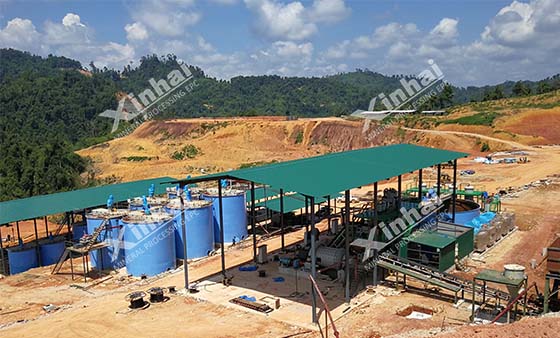
Cutting cost does not mean cutting corners. The goal is balance.
Choose the process based on test data, not habit
Avoid over-designing “just in case”
Use modular gold plant layouts when possible
Think about expansion during the first design stage
A modular gold processing plant may cost slightly more per ton at the start. But it lowers risk. It also helps when cash flow is tight in the early years. Many operators appreciate this flexibility later. I would, too.
People still want numbers. That’s fair.
Below are rough reference ranges, not quotes. They help set expectations.
| Plant size | Typical investment range |
|---|---|
| Small (≤300 TPD) | Lower entry cost |
| Medium (500–1500 TPD) | Most common choice |
| Large (≥3000 TPD) | High upfront, low unit cost |
The smarter question is not “How much total?”.
It is: What is the cost per ton of ore, and does it fit this gold mine?
That question leads to better decisions.
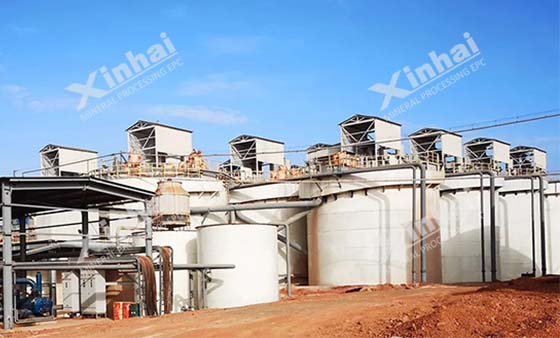
A gold processing plant is not a short-term purchase. It is a system meant to work every day, often in tough conditions, for many years.
A well-matched gold plant can quietly make money year after year. A poorly matched one becomes a constant problem. Downtime, high costs, low recovery. None of that shows up clearly in the first budget sheet.
If you are planning a gold mine project, or thinking about building or upgrading a gold processing plant, slow down at the design stage. Look at the ore. Look at the long-term operation. That is where most value is created or lost.
If you want to learn more about how extract gold processes are customized for different ores, or how real projects balance cost and recovery, you can explore Xinhai's customized services and technical solutions. Starting with the right process often matters more than chasing the lowest initial price.
Welcome to contact us!
 008613641173523
 xhcnlite@ytxinhai.com
No. 188, Xinhai Street, high-tech Industrial Park, Fushan District, Yantai, Shandong, China.
Please leave your message here! We will send detail technical info and quotation to you!

 Home
Home Online Service